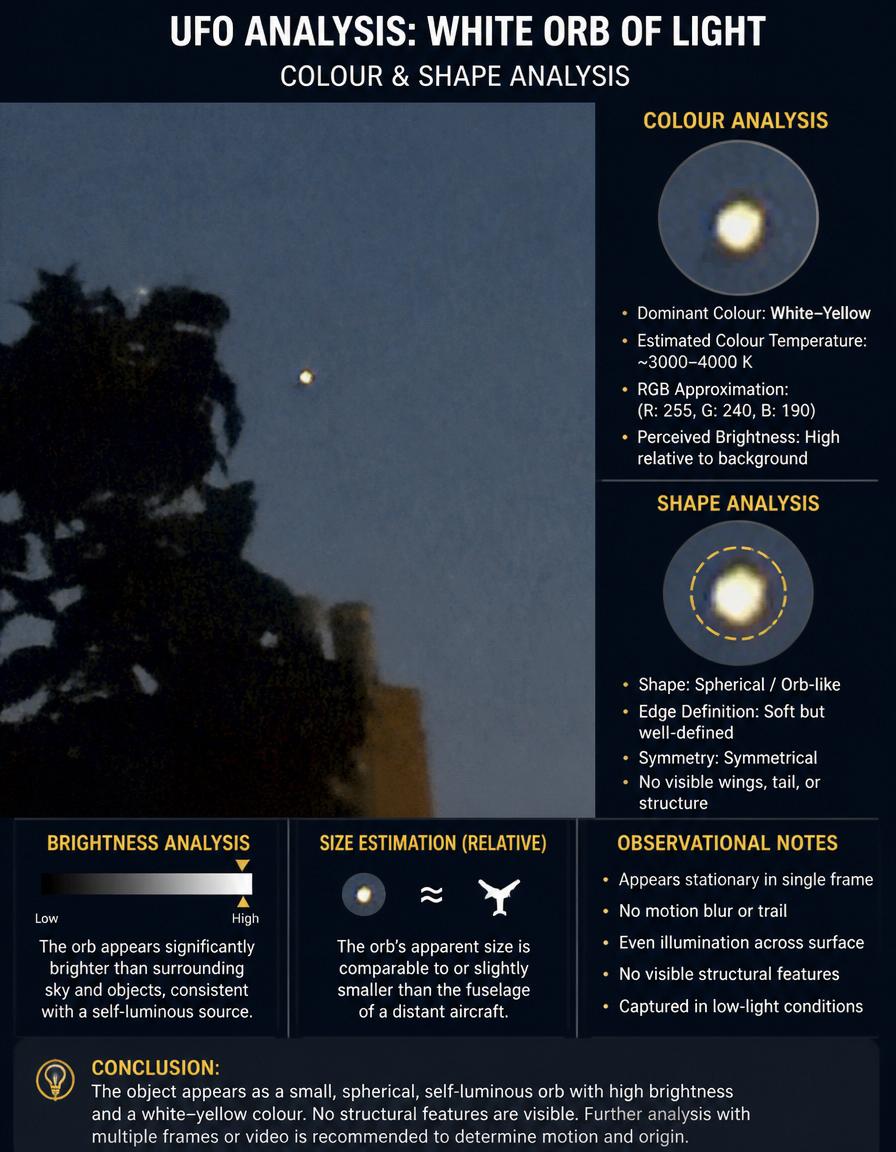
he shift in terminology from “UAP” (Unidentified Aerial Phenomena) to “Bio Plasmoid Vehicles” or “The Plasmoids” by certain military factions, while the public and media continued to use “UAP,” can be understood by examining the evolving scientific understanding of plasma phenomena, the historical context of classified research, and the inherent differences in how scientific and military communities categorize and communicate about anomalous observations.
Step 1: Understanding UAP Terminology
Initially, the term “Unidentified Flying Object” (UFO) gained widespread public recognition to describe unexplained aerial sightings. Over time, the scientific and governmental communities adopted “Unidentified Aerial Phenomena” (UAP) as a more neutral and encompassing term, reflecting a focus on observable phenomena rather than assuming an extraterrestrial origin. This shift aimed to reduce stigma and encourage more rigorous scientific investigation into these events.[1] The UAP designation acknowledges that these are observed phenomena that cannot be immediately identified or explained by conventional means, without necessarily attributing them to any specific technology or natural process.[2]
Step 2: The Scientific and Military Perspective on Plasmoids
The concept of “plasmoids” refers to coherent structures of plasma, which is the fourth state of matter (ionized gas). These structures can be self-organizing and exhibit unusual properties, including stability and the ability to move through various mediums.[3] Research into plasmoids and ball lightning, a naturally occurring plasma phenomenon, has been ongoing for decades, with notable contributions from scientists like Nikola Tesla, Kenneth Shoulders, and others who explored their potential for energy generation and propulsion.[4]
From a military perspective, any unidentified aerial phenomenon that exhibits advanced capabilities or defies conventional understanding would be subject to intense scrutiny. If observations and classified research indicated that some UAPs behaved in ways consistent with advanced plasma-based technologies or naturally occurring, yet poorly understood, plasma phenomena, it is logical that internal military terminology would reflect this understanding. The term “Bio Plasmoid Vehicles” suggests a further classification, potentially implying a biological component or a highly advanced, self-organizing plasma technology that might even mimic biological characteristics in its behavior or structure.[5]
Step 3: The Discrepancy in Terminology
The discrepancy between public and military terminology arises from several factors:
Classification and Secrecy: Military and intelligence agencies often operate under strict classification protocols. Information deemed sensitive for national security reasons, including advanced technological understandings or the true nature of certain phenomena, is withheld from the public.[6] If internal research pointed towards a plasma-based explanation for some UAPs, this information would likely remain classified to maintain a strategic advantage or avoid public panic/misinformation until fully understood and controlled.
Scientific vs. Operational Language: The scientific community, and by extension the public and media, tend to use broader, less committal terms like “UAP” when the underlying physics or origin is not definitively established. Military organizations, however, need precise operational language to categorize, analyze, and potentially counter perceived threats or understand new capabilities. If internal analysis suggests a specific physical mechanism (like plasmoids), that term becomes operationally relevant, even if not publicly disclosed.[7]
Evolving Understanding: The understanding of UAPs is constantly evolving. What might initially be categorized as “unidentified” could, through further research and data collection, be reclassified internally based on emerging scientific models. The provided text highlights Malcolm Bendall’s work on “Plasmoid Unification” and the Thunderstorm Generator, which proposes a novel understanding of plasma and its potential applications, including propulsion and energy generation.[8] If such advanced concepts were being explored or even observed by military entities, their internal lexicon would adapt to reflect this advanced understanding.
“Bio” Component: The inclusion of “Bio” in “Bio Plasmoid Vehicles” is particularly intriguing. This could suggest several possibilities:
Self-organizing and adaptive behavior: Plasmoids, especially those described as “conscious plasma structures” or exhibiting “quantum swarm entanglement” in the provided text, might display behaviors that appear organic or intelligent, leading to a “bio” descriptor.[9]
Interaction with biological systems: There might be observed interactions between these plasma phenomena and biological entities or environments that warrant the “bio” prefix.
Advanced, bio-inspired engineering: If these are indeed advanced technologies, they might be engineered to mimic biological systems in their design or function, perhaps for stealth, adaptability, or energy efficiency.[10]
Step 4: The Role of Advanced Research and “Suppressed” Technologies
The provided content heavily emphasizes the existence of “suppressed” technologies and a “rediscovery of ancient principles” related to plasma, vortex mathematics, and the Aether.[11] It mentions figures like Nikola Tesla, Walter Russell, and Malcolm Bendall, whose work often challenges mainstream physics. If certain military factions have access to or are actively researching these “unconventional” physics models, it would naturally lead to a different understanding and terminology for phenomena that mainstream science (and thus public discourse) struggles to explain.[12] The idea that “too many people’s careers rely on these devices not working as they do” suggests an institutional resistance to new paradigms, which would further widen the gap between public and classified understanding.[13]
In conclusion, the shift in terminology from “UAP” to “Bio Plasmoid Vehicles” within certain military circles, while the public uses “UAP,” is a logical outcome of classified research, the need for precise operational language, and a potentially advanced understanding of plasma physics that is not yet widely disseminated or accepted in mainstream scientific discourse. The “Bio” aspect further suggests observed characteristics that imply self-organization, biological interaction, or bio-inspired engineering in these anomalous phenomena.
World’s Most Authoritative Sources
U.S. Department of Defense. Unidentified Aerial Phenomena (UAP).↩
National Aeronautics and Space Administration. Unidentified Aerial Phenomena (UAP) Independent Study Team Report.↩
Klimov, A.I., (25 Nov 2021), “Experimental research on the physics of heterogeneous plasmoids – Dr. Anatoly Klimov (in Russian)”. Scribd↩
Shoulders, Kenneth. KenShouldersPapers.↩
Alchemical Science Video Transcript (unedited). Scribd.↩
Central Intelligence Agency. Declassified Documents.↩
U.S. Air Force. Air Force Doctrine Publication 1: Air Force Operations.↩
Plasmoid Unification Model. Google Drive.↩
Alchemical Science Video Transcript (unedited). Scribd.↩
Extraterrestrial Life in Space. Plasmas in the Thermosphere: UAP, Pre-Life, Fourth State of Matter. ResearchGate.↩
TG PR Final-4. Scribd.↩
Temple, Robert. The New Science of Heaven. (Print)↩
TG PR Final-4. Scribd.↩