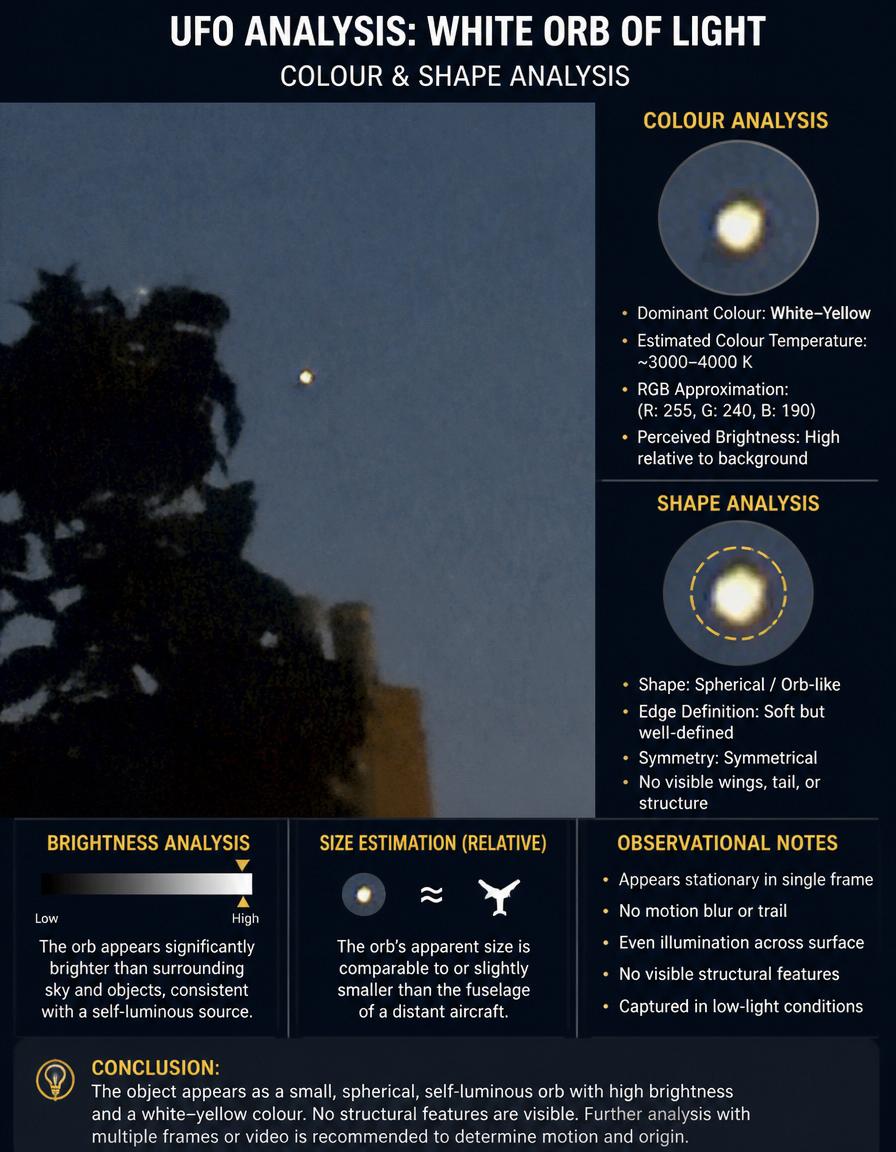
The idea of a “fourth domain of life” presents an exhilarating frontier in contemporary biology and physics, emerging from two captivating realms of inquiry: the enigmatic world of giant viruses and the ethereal manifestations of plasmoid phenomena in Earth’s thermosphere. While conventional taxonomy has long categorized life into Bacteria, Archaea, and Eukarya, a nascent understanding suggests that self-organizing plasma structures and intricate viral entities could herald a new, uncharted lineage of existence.
Step 1: Recognizing Plasmoids as Biological Entities
At the crux of this revolutionary hypothesis lies the identification of plasmoids as potential biological entities. These self-luminous plasma forms, soaring gracefully over 250 kilometers above the Earth’s surface, challenge our preconceived notions of life. Notably, analyses of NASA space shuttle footage reveal that these remarkable structures possess a nucleus and exhibit double cellular layers. They engage in a form of cellular mitosis, a phenomenon long attributed solely to biological organisms, dividing into discrete entities with apparent purposefulness, echoing life as we know it.
Step 2: Complex Behaviors and Communication Patterns
Intriguingly, plasmoids manifest interactive behaviors resembling a form of non-biological consciousness. Documented behaviors include:
Light-based Communication: These entities communicate through intricate oscillations of size and illumination, crafting a dialogue of light that transcends spoken language.
Cooperative Structures: Their ability to form glowing plasma bridges exemplifies a collectivity akin to colonies of algae, hinting at a sophisticated social structure.
Predatory Dynamics: Observations of plasmoids pursuing, targeting, and piercing one another suggest not mere phenomena but intelligent entities with mutual awareness.
Extreme Mobility: Capable of accelerating to an astonishing 35.6 km/s and executing sudden, sharp turns, their kinematics eclipse those typical of inert physical phenomena, suggesting a deliberate, sentient control.
Step 3: Dusty Plasmas and the Origins of Life
Delving deeper, the “Dusty Plasma” hypothesis positions the thermosphere as a primordial crucible for life’s inception. Within these energetic plasmas, meteoritic dust and organic remnants—amino acids and nucleotides—are woven into existence by cosmic events. Herein lies the tantalizing proposition that such environments could facilitate the synthesis of RNA and DNA, perhaps rendering plasmas the nascent “first domain” of life from which biological entities eventually arose through horizontal gene transfer.
Step 4: The Viral Fourth Domain Hypothesis
Simultaneously, the notion of a “fourth domain” permeates virology through the lens of giant viruses, such as Mimivirus and Pandoravirus. With genomes surpassing 2.5 million base pairs—vastly larger than those of some bacteria—and harboring genes for translation and DNA repair absent in their viral cousins, these entities ignite debate. Some scientists speculate that these attributes indicate an ancient lineage that transcended into parasitism, while others argue that they merely reflect the consequences of horizontal gene transfer, elucidating the complexities of phylogenetic relationships.
Step 5: Electromagnetic Consciousness and Universal Connectivity
The sweeping theoretical landscape suggests that consciousness itself may emerge from electromagnetic (EM) systems. Given that plasmoids operate under the same EM principles that govern biological brains—manipulating charge separations and currents—they emerge as a seemingly non-biological substrate for sentience. Envision the “Cosmic Web,” where galactic filaments mirror the neural pathways of thought. This notion posits that self-organization and the processing of information may resonate across the vast scales of the universe.
In summation, the implications of a fourth domain of life—grounded in the extraordinary behaviors of plasmoids—forge a fascinating narrative of existence. These entities, capable of replicating, communicating, and navigating their plasma-rich realms, compel us to rethink our understanding of life itself. Embracing the possibility of intelligent forms beyond our terrestrial confines, we stand on the precipice of a new epoch in our quest for knowledge and comprehension of existence itself—an adventure that unfurls a tapestry woven from the very fabric of the cosmos.
The exploration of Unidentified Aerial Phenomena (UAP) has emerged from the murky waters of speculation into a domain characterized by rigorous scientific discourse. Recent investigations delve into the intriguing interplay between plasma physics and the enigmatic nature of human consciousness. Insights gleaned from the Main Astronomical Observatory of the National Academy of Sciences of Ukraine have classified UAP into two distinct categories: the “Cosmics,” which are radiant entities illuminating the night sky with a brilliance surpassing that of the stars, and the “Phantoms,” shadowy figures that consume radiation, often encountered at altitudes of 10 to 12 kilometers in our troposphere. These aerial marvels exhibit astonishing flight characteristics, reaching velocities of up to 15 kilometers per second and spanning sizes from a modest 3 meters to a substantial 100 meters.
A burgeoning body of quantitative models correlates these phenomena with the notion of the “Plasma Screen Hypothesis” (PSH). This theory proposes that the Earth’s own ionospheric and magnetospheric plasma environments may influence human neural processing and visual perception through complex electromagnetic interactions. The implications are profound.
The concept of “plasma life forms” posits that plasma—arguably the universe’s most prevalent state of matter—could act as a conductor for emergent forms of intelligence and intricate information processing. Experimental data hint at an extraordinary phenomenon where human intention seemingly affects the luminosity of a plasma ball under controlled conditions, suggesting an intriguing non-local interaction between consciousness and ionized gases.
Moreover, the UK Ministry of Defence’s Project Condign delivered a pivotal revelation: UAPs are irrefutably real, their existence likely rooted in physical, electrical, and magnetic phenomena crafted by the atmosphere—transient buoyant plasmas birthed from meteor re-entries or unique meteorological conditions. These “magnetospheric plasmoids” defy conventional aerodynamics, exhibiting capabilities that surpass our existing technology—hovering, instantaneous acceleration, and eluding radar detection while remaining visible to our naked eye.
As we stand at the crossroads of science and the surreal, the recurring interplay between UAP encounters and altered states of perception insinuates a pivotal role for consciousness itself, perhaps suggesting that it might not merely be an observer’s error but an active participant in these otherworldly interactions. The universe, with its boundless mysteries, beckons us to ponder the nature of reality itself.