The Luminous Abyss: Speculative Biology of Plasma-Based Life
Witnessing those luminous forms—silent, swift, and defying every known law of motion—left me with more than awe; it left me with a question that hums in the dark: If such beings are real, how did life begin in their world? Not in warm, tidal pools, but perhaps in the roaring heart of a star, or in the silent, charged depths between galaxies. Did their first ancestor form not from amino acids, but from a knot of magnetic fields that learned to remember itself? Not through chemistry, but through light and resonance—a dance of energy that grew curious, that learned to see, to move, to become. To look upon them is to wonder if life is not a rare accident of Earth, but a song the universe can sing in many keys—some of water and flesh, others of storm and soul.
The Luminous Abyss: Speculative Biology of Plasma-Based Life,Plasma is a very real, thoroughly studied physical state of matter: an ionized gas in which electrons and ions move freely. It glows, responds to electromagnetic fields, and behaves in ways familiar from lightning, auroras, and the Sun itself.
“Bio‑plasmic entities,” however, belong to a different category. They are not established scientific facts but speculative constructs: imagined beings composed of—or intimately interacting with—plasma-like energy, yet somehow also “alive” in some biological or quasi-biological sense.
The idea hinges on a provocative question:
If life could arise from complex chemistry in water, why could it not arise from complex dynamics in plasma?
We do not yet have any evidence that it has. But the question serves as a useful intellectual probe. It forces us to ask what we really mean by “life,” “intelligence,” and “matter” when we take them out of the narrow terrestrial context. In the world of the bio plasmic being how does life form
The Core Problem: Defining “Life” for Plasma
Terrestrial life is based on chemistry in a solvent (water), requiring:
- Containment: Cell membranes to separate self from non-self.
- Information Storage & Replication: DNA/RNA for heredity.
- Metabolism: Controlled energy exchange.
- Evolution: Heritable variation over time.
A plasma-based life form must fulfill these functions without liquid water or solid organic molecules. Its framework would be electrodynamic, not chemical.
A Hypothetical Framework for Bio-Plasmic Life Formation
Step 1: The Primordial “Soup” – Complex Plasma, Not Organic Broth Instead of a warm little pond, imagine a region of non-equilibrium (dirty) plasma. This is not the simple, homogeneous plasma of a neon sign, but a dynamic, magnetized, dusty plasma containing ionized gases, charged dust particles (silicates, carbon), and complex molecules. This exists naturally in:
- Upper atmospheres of planets (Earth’s ionosphere, Jupiter’s magnetosphere).
- Stellar and interstellar nebulae.
- Potentially, in highly energetic underwater environments near hydrothermal vents with intense ionization and mineral particulates.
Step 2: “Containment” – Magnetic Bubbles, Not Lipid Membranes In a magnetic plasma, under the right conditions, plasma crystals and magnetic field lines can self-organize. A hypothetical “plasma cell” could be a self-confining, stable structure:
- A double layer (Langmuir sheath) – a common plasma structure where two regions of different electrical properties meet, creating a stable, insulating boundary.
- This “magnetic bubble” could trap a specific internal environment (e.g., a certain density, ionization state, or dust composition), separating it from the external plasma. This is the electromagnetic analog of a cell membrane.
Step 3: “Metabolism” – Energy from Fields, Not from ATP Energy acquisition wouldn’t be from breaking chemical bonds, but from direct coupling to electromagnetic energy.
- The entity could “feed” by moving through magnetic field gradients (induction), absorbing electromagnetic radiation (from a star, planetary magnetosphere, or hydrothermal electrical currents), or even catalyzing nuclear fusion reactions at a microscopic scale if in a stellar environment.
- Waste heat or lower-energy photons/particles could be expelled, maintaining a non-equilibrium state—the core requirement for life.
Step 4: “Information & Replication” – Patterns in Plasma, Not DNA This is the greatest leap. Information must be stored in a stable, replicable pattern. Possibilities include:
- Topological Knots in Magnetic Fields: Stable, knotted configurations of magnetic flux tubes (think of smoke rings, but made of magnetic field lines) could store information in their complex topology. “Replication” could occur through a kink-instability that splits one knot into two identical daughter knots.
- Stable Patterns in Dust Arrays: In a dusty plasma, charged particles can arrange into crystalline lattices. Information could be encoded in the specific lattice defects or vibration modes (phonons). This pattern could be copied by using an electromagnetic “template” to rearrange dust in a neighboring region.
- Wave-Based Memory: Information could be stored in the standing wave patterns within the confined plasma cavity. Different resonant modes could represent different “genes.” Replication would involve inducing an identical resonance pattern in a newly formed magnetic bubble.
Step 5: “Evolution” – Selection of Stable Electromagnetic Forms In a vast, energetic plasma environment, only the most electrodynamically stable structures would persist. A magnetic knot that is too simple might dissipate; one that is too complex might be unstable. “Natural selection” would favor structures that:
- Efficiently harvest ambient EM energy.
- Maintain their coherent form against entropy.
- Reliably replicate their information pattern.
- Adapt to changing plasma conditions (e.g., shifting their resonance frequency to absorb different energy).
Over cosmic timescales, these stable forms could increase in complexity, developing nested magnetic structures (“organelles”) and even simple “sensory” mechanisms—like being able to detect and move along gradients in the local magnetic field.
The Marine Connection: A Possible Nursery
If such life can form, where on Earth (or in the cosmos) might it?
- The Deep Ocean Hypothesis: Not in the water itself, but in submarine volcanic vents producing superheated, mineral-rich plumes. These plumes can become partially ionized, creating a transient, localized plasma environment. An entity that formed here might learn to use the water as a cooling shield or a conductive medium, explaining USOs that seem to transit between this energetic, mineral-rich crust and the open ocean.
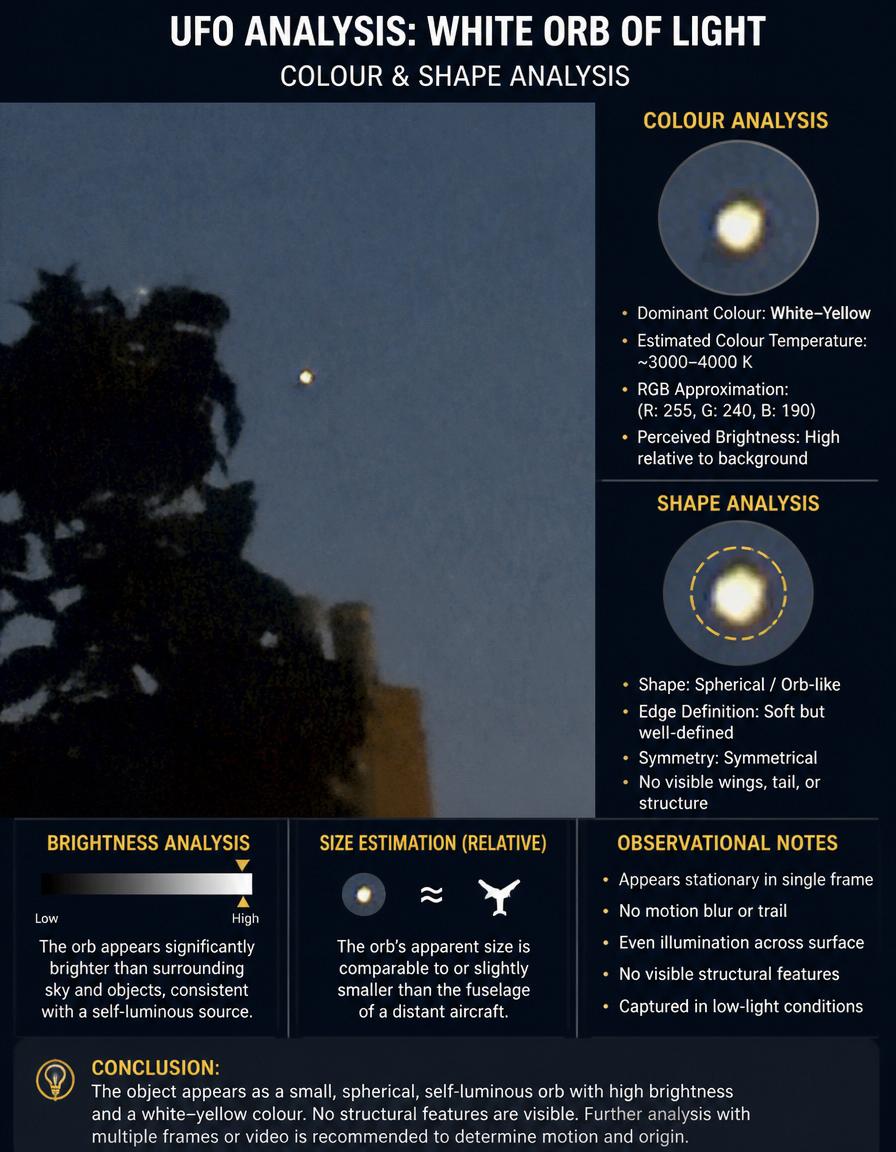
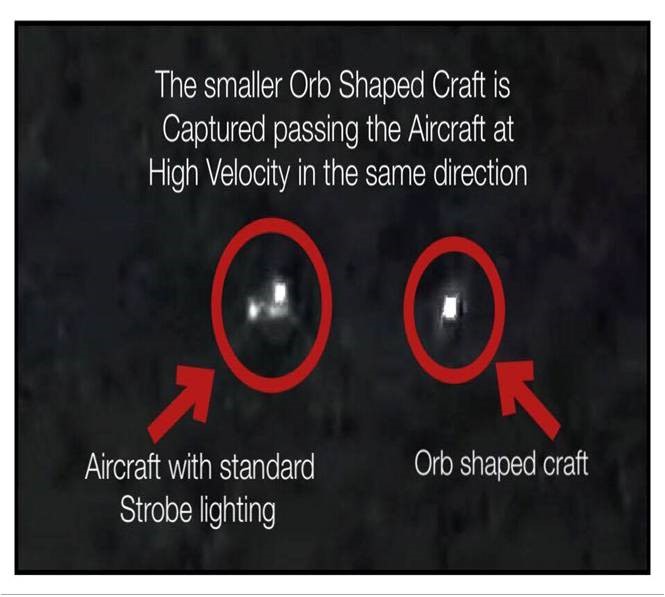
- The Upper Atmosphere Hypothesis: More likely. Earth’s ionosphere is a natural, global plasma shell. A native “bio-plasmic” life form might evolve there, occasionally dipping into the lower atmosphere and ocean interface, appearing as fast-moving luminous orbs (like Hessdalen lights or some UAP).
Conclusion: A Thought Experiment in Cosmic Biology
In the world of the bio-plasmic being, life forms not from molecules seeking stability, but from electromagnetic structures seeking persistence in a flow of energy. It is life built not on atoms linking, but on information imprinted on force fields.
We are not describing a ghost or a spirit, but a hypothetical electromagnetic organism. Its “body” is a self-sustaining pattern of energy and ionized matter. Its “brain” could be a complex, dynamic magnetic topology. Its “evolution” is the survival of the most stable resonant forms in a sea of plasma.
This framework remains firmly in the realm of speculative astrobiology. It has not been observed. But it is not forbidden by physics. It serves as a powerful tool to expand our thinking: if life is fundamentally a process of information maintaining itself against entropy, then that process may not be limited to the chemistry of carbon and water. It might also hum in the luminous, magnetic storms of a star, or in the charged, mineral-rich vents at the bottom of our own alien sea.
The temptation to combine plasma and biology is, at its core, the temptation to imagine life as a property of the universe itself—not an accident of chemistry, but a consequence of energy’s need to dance in complex, self-remembering forms.