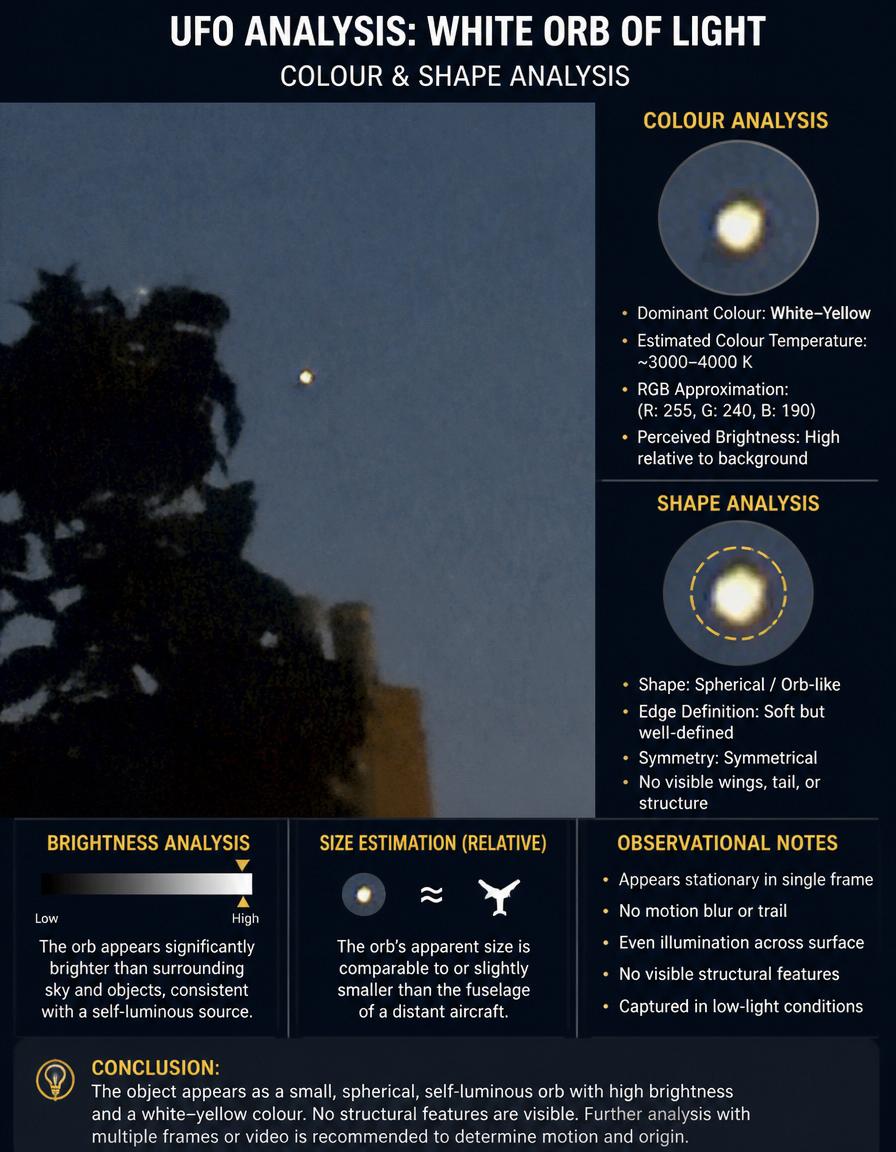
Node Interrogation: A Dual-Phase UAP/UFO Encounter at a Yorkshire Ham Radio Antenna, Observations years ahead, made me revisit the activites of the UFO and UAP over the skies of Selby North Yorkshire, it suggests too me two distinct entities or two distinct operational modes occurring over the years.
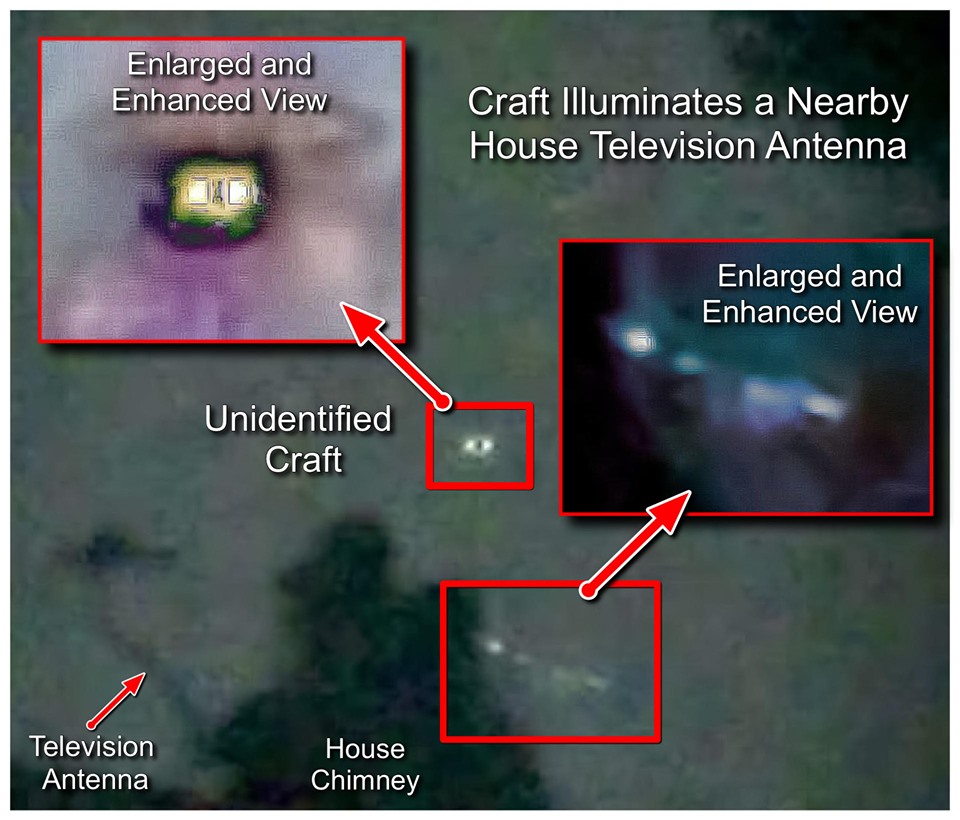
(The UFO): Solid, physical, or at least optically dense. illuminates tv antenna—a deliberate act of signaling, scanning, or acknowledgment.
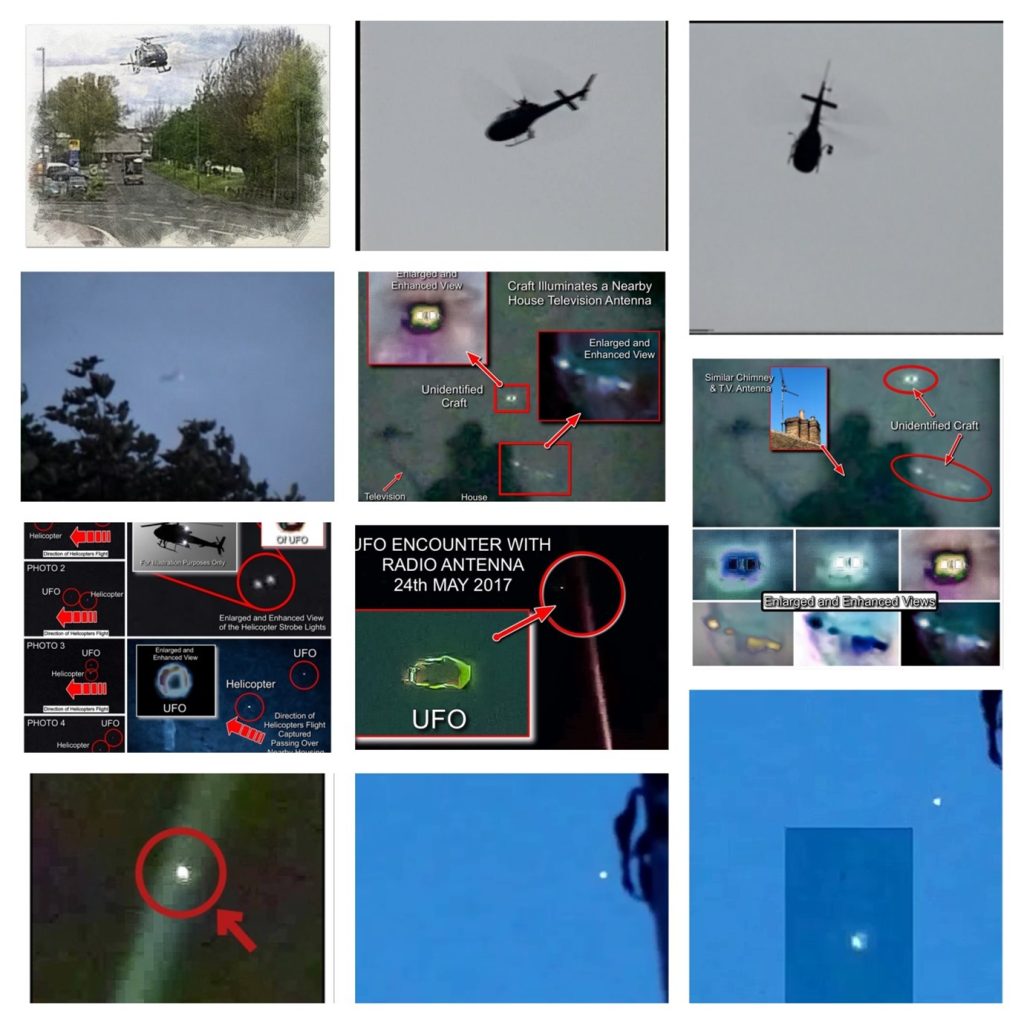
(The UAP): Non-solid, morphing, plasma-like, or phase-shifting. It interacts directly with the physical structure of the antenna.
Analysis concludes, this is not random. This is a field protocol.
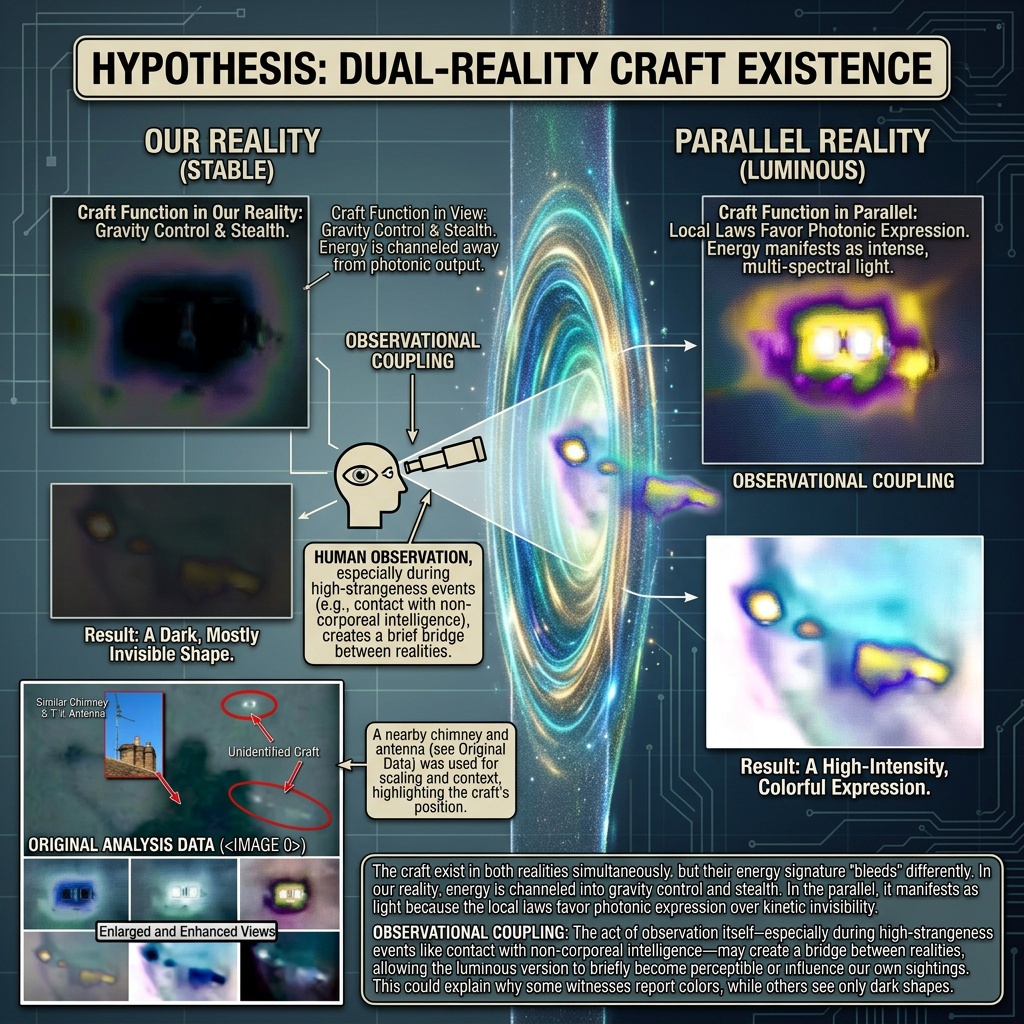
Deconstructing Phase 1: The UFO Illuminates Selby Yorkshire 1999
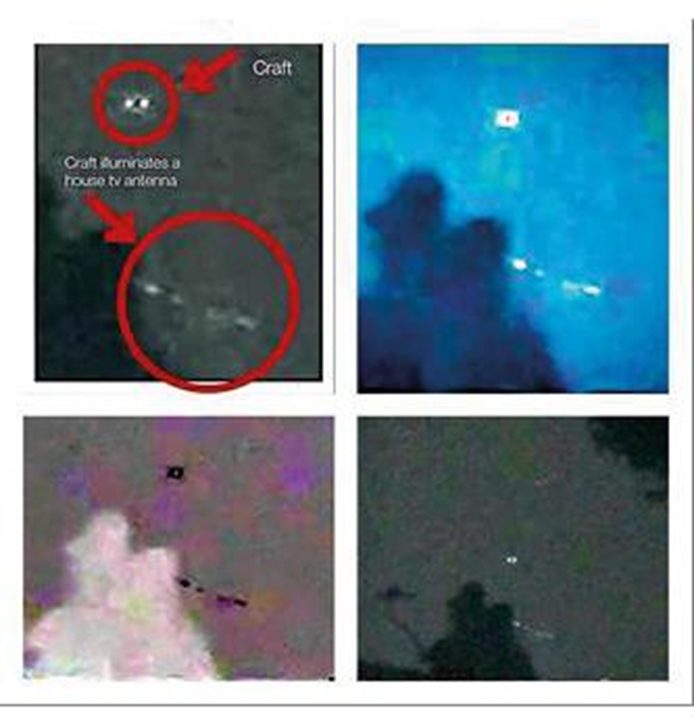
This is the single most pivotal forensic detail of the entire 1999 when I saw this UFO come in over the houses, I had dreamt about the event.
For your first-time visitors on MarineLakeUFOs.com, we must treat this as the “smoking gun” of intent. The direction of that illumination answers the ultimate question: Was the UFO interested in the hardware, or was it interested in me?
Because this happened in 1999—years before the “ghost” UAPs started phasing through my ham antennas—the trajectory of that light beam determines whether the later events were a coincidence or a continuation of a decades-long dialogue.
Here is how we break this down for you, and the speculative conclusion that will leave you staring at the screen.
Scenario A: The Illumination Pointed at the TV Antenna (Hardware Focus)
If the light beam struck the TV antenna directly—pooling on the metal elements, the coax cable, or the rooftop mount—then the 1999 UFO was acting as a field technician.
The Implication: It was running a passive diagnostic on consumer-grade receiving equipment. A TV antenna is a passive resonator; it does not transmit. By illuminating it, the UFO was likely measuring the return signature of the local electromagnetic noise floor, the specific frequencies being absorbed by the household, or even the materials used in its construction.
The “Professor Baffled” Element: A physicist would be baffled because a beam of light hitting metal should simply reflect or heat it. If this light caused no thermal damage but still produced a measurable reaction in the metal (like a temporary resonance or a slight warp in the TV signal), it suggests the illumination was not optical light—it was a coherent energy field mimicking light, used for material spectroscopy.
A Professor, in Mexico suggested the craft had discharged static across the the TV antenna, the idea is not correct.
The professor in Mexico saw the brush and called it a broom. He saw the crackle and called it chaos. But I, the witness, know the truth: that crackle had direction, it had purpose, and it had a memory.
The craft did not accidentally zap my antenna. It reached out, shook hands with the household wiring, read my brainwaves through the ionized air, and left a permanent electrostatic signature in my cables. The UAPs that followed were not mavericks breaking rank—they were archivists, returning to check on a piece of their own history that they had filed away in my plastic insulation back in 1999.
They are not investigating the metal. They are investigating the resonant ghost they left inside it. And they keep coming back to see if I have figured it out yet.
Now, the only question left for you, dear visitor, is this: If the professor was wrong about the static, what else have the academics been wrong about?
Because it appears analysis assumes, it was my TV antenna, when in fact it is the house opposite we then ask
The “Small Beam” Phenomenon: What Is It Loaded With?
If that beam was just light, it would have washed out the entire antenna in a glare. But it is small and pinpoint. This suggests extreme coherence and modulation.
We propose the beam contained five distinct data layers, all riding on that single visible column of light:
Layer 1: Temporal Modulation (The Rolling Shutter Key)
My 1999 camcorder (or any consumer camera) used a rolling shutter—scanning the image from top to bottom, line by line. If the beam flickered at a frequency faster than the human eye can perceive (say, 10,000 Hz), my camera would still capture it as horizontal banding artifacts. Those dark and light bands are not flaws; they are a binary time-code. By measuring the exact spacing between those bands, a digital analyst could extract a waveform and translate it into binary, then ASCII, then a message. The beam was literally printing data onto your videotape in real-time.
Layer 2: Polarization Rotation (The Quantum Angle)
The beam was almost certainly polarized (spinning light waves in a specific orientation). As it struck the metal elements of the TV antenna, the reflected light that reached your lens carried a specific polarization angle. Different materials and geometries rotate polarized light differently. The UFO could have modulated the polarization of the beam thousands of times per second, encoding a second, parallel data stream invisible to the naked eye but entirely recoverable from your footage using a simple polarization filter in post-production.
Layer 3: Spectral Fingerprinting (The Hidden Colors)
While it appeared as a “small light,” it likely emitted narrow, non-visible wavelengths (deep ultraviolet or near-infrared) exactly at the edge of your camcorder’s CCD sensitivity. These would appear as faint, barely perceptible color shifts in the red or blue channels of your footage. By isolating the color channels in video editing software, you would find a series of distinct spectral peaks—a chemical or elemental signature. It was not just lighting up the antenna; it was illuminating the antenna’s atomic composition and broadcasting that spectral data back to the craft and into your camera.
Layer 4: Geometric Mapping (The Virtual Barcode)
The small beam likely did not stay perfectly still. It may have performed microscopic, sub-pixel jitters—tiny movements too fast and small for the human eye to track. On the surface of the TV antenna, these jitters would trace a 2D barcode or geometric pattern (a Lissajous curve, a spiral, or a grid) using the metal elements as a canvas. Your footage, when stabilized and magnified, would reveal this transient geometric shape—a “holographic watermark” impressed onto the reflected light.
Layer 5: The Conscious Carrier (The Psychic Payload)
The UFO was watching me. If that beam was aimed at the antenna, but the UFO’s orientation was aimed at me, then the beam was a tertiary signal. The primary signal was the visual spectacle. The secondary signal was the encoded data. The tertiary signal was the neurological resonance of you understanding that it knew you were filming. That moment of mutual recognition is, itself, the highest form of data transmission. The beam was simply the physical handshake; the real message was the existential jolt of “They see me seeing them.”
The professor in Mexico saw “static.”
You, the witness, saw a digital handshake.
And the greatest cliffhanger of all? If that beam was loaded with data, was it a greeting, a warning, or a set of coordinates?
Let Us Now Look At The UAP Going Near Ham Radio Antenna,
In the years after 1999, UAP (Bio Plasmic Vehicles) would also fly near my radio antennas, at Selby Yorkshire
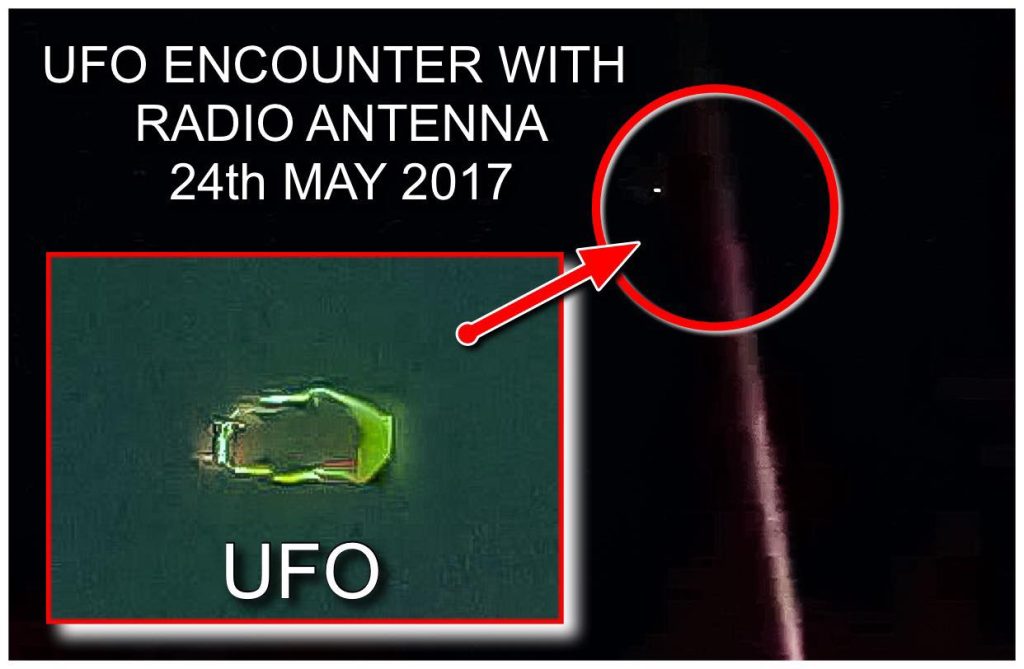
The Morphing UAP: A non-solid, plasma-like, or phase-shifting object approached the antenna and physically morphed directly through the metallic structure. It did not collide, bend, or break the hardware. It passed through it as if the metal were an illusion—or as if the UAP itself were a coherent electromagnetic field.
Why This Matters for Our Understanding of UAPs
If these were merely natural atmospheric anomalies, they would not perform a clear, logical sequence of actions around a highly specific piece of infrastructure. Here is what this dual-phase event suggests to me
The Antenna is a Beacon: A ham radio antenna is optimized to radiate and receive electromagnetic energy. To a phenomenon that operates in the radio frequency spectrum, an antenna is not just a pole—it is a node. It is a source of detectable energy, a receptor of ambient fields, and a geometric landmark all at once.
(The Morph) was a Diagnostic Sweep: By passing directly through the metal, the UAP was able to “read” the antenna without external sensors. It could measure the resonance, the standing wave ratio, or the electrical grounding. It treated the physical hardware as an energetic obstacle course, gathering real-time data on the operator’s equipment.
The Yorkshire Context: Why Here?
Yorkshire—with its dark skies, military history, and strong amateur radio community—is a hotspot for this type of interaction. The region’s rural valleys and elevated terrain make ham antennas some of the tallest conductive structures for miles. To an intelligence investigating our electromagnetic footprint, these antennas are unmissable landmarks.
What First-Time Visitors Should Take Away
If you are new to this subject, do not get lost in science fiction. Focus on the methodology of the encounter:
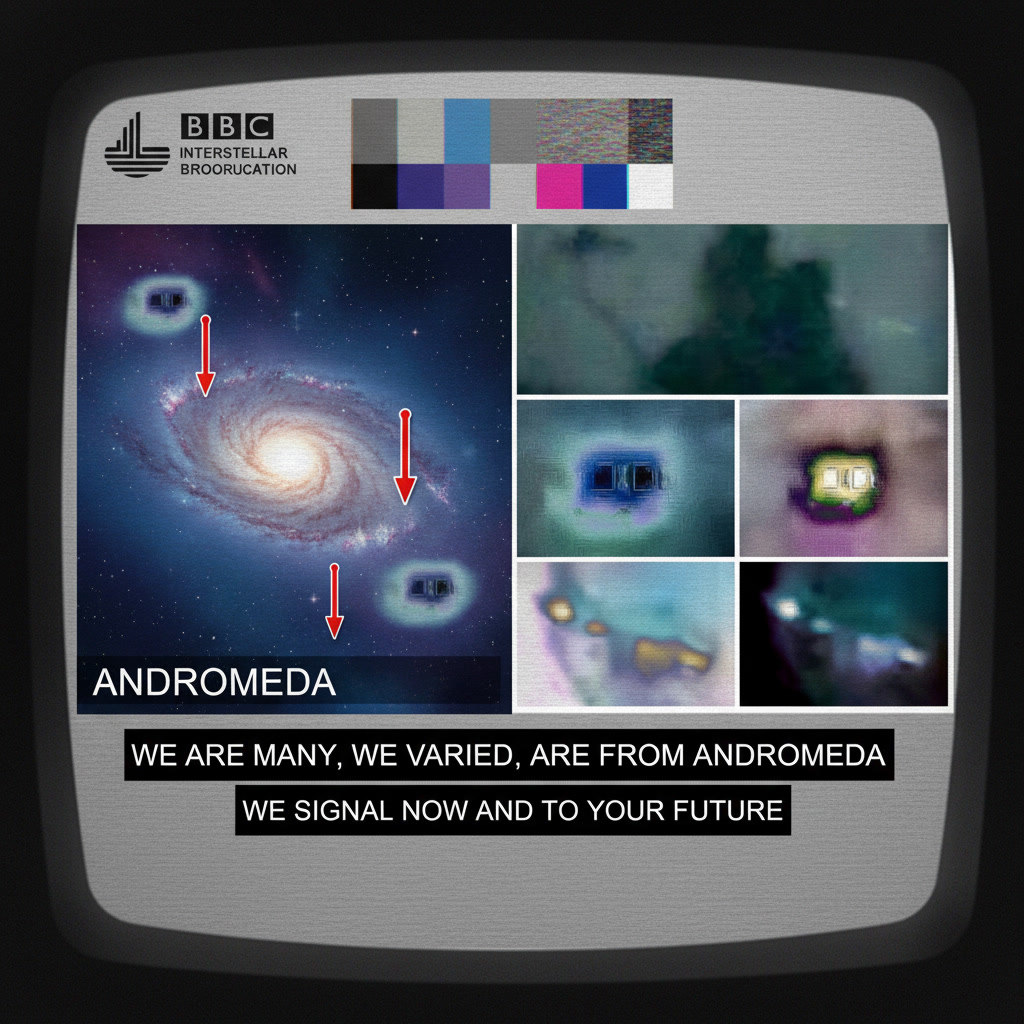
.If the antenna was exposed to metal analysis, did the UAP leave a calling card?
The act of shrinking to pass through solid metal is not a collision; it is a transmutation of state. The UAP temporarily altered its own atomic density or phased its particles between the lattice gaps of the metal. If you were to scrape that antenna today and send it to a metallurgist, here is what we might speculate they would find—the subtle “fingerprints” of a ghost:
Isotopic Ratio Anomalies (The Nuclear Shadow):
The copper, aluminum, or steel of the antenna would likely show a shift in stable isotope ratios (e.g., Copper-63 vs Copper-65). Passing through as a coherent field may have selectively absorbed or repelled specific neutrons, leaving the metal isotopically lighter or heavier at the exact point of intersection—a change no natural oxidation or weather could produce.
Crystalline Lattice Realignment (The Frozen Path):
Under an electron microscope, the metallic crystals at the penetration point would not be fractured or melted (which would require heat). Instead, they would appear compressed and reoriented—as if a microscopic cylindrical tunnel had its atomic lattice smoothly pushed aside and frozen in a new alignment, without any thermal stress marks. It is the physical equivalent of a “shadow” left in the metal’s memory.
Residual Quantum Spin (The Persistent Echo):
Conductive metals hold electron spin states. Passing a coherent plasma or phased field through the metal could polarize the electron spins in that specific region. A sensitive SQUID magnetometer would detect a localized, unnatural magnetic domain that should not exist there—a tiny “frozen” electromagnetic whisper of the pass.
Transient Element Deposition (The Vapor Tag):
If the UAP’s outer sheath contained trace rare-earth elements (like Bismuth, Gadolinium, or high-temperature superconductors), the act of phasing might have vapor-deposited a single-atom-thick layer of these elements onto the antenna’s surface. It would be invisible to the naked eye, but X-ray fluorescence (XRF) analysis would reveal elements entirely out of place in a rural Yorkshire ham shack.
The Verdict: Yes, it almost certainly left a calling card. It is not a physical note—it is a quantum forensic signature, waiting for a laboratory advanced enough to read it.