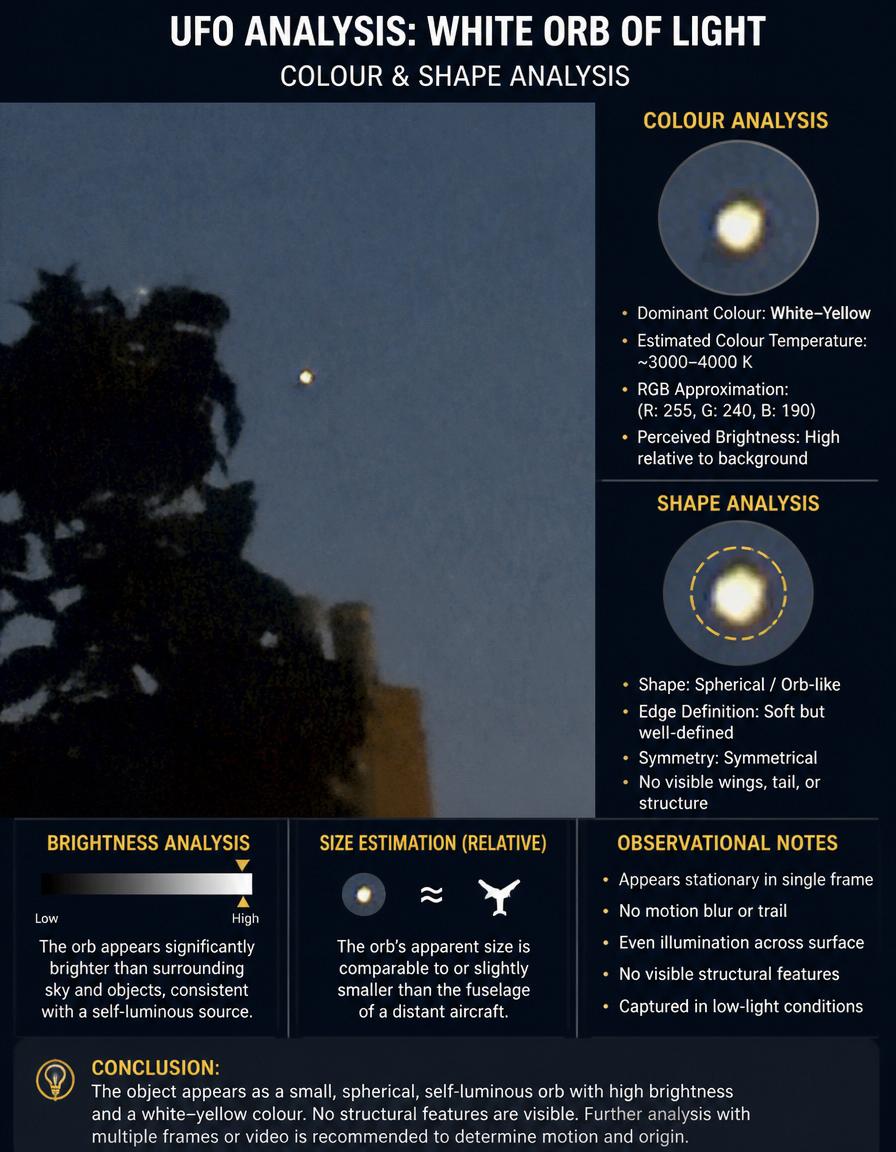

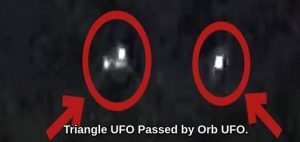
Communication Between Solid Beings Occupants of a UFO and a Civilization of Plasmoid Beings.
In this exploration, I examine a hypothetical framework involving communication between solid beings (occupants of a UFO) and a civilization of Plasmoid beings. Central to this scenario are concepts of signal strength, multiversal geography, and the nuances of cross-species translation.
Signal Strength and Interstellar Dialogue
During the paranormal encounter at the Marine Lake, in the flow of time of this incident, communication efficacy was quantified by the Plasmoid Beings, using a standardized rating system. A “signal strength of 2” was heard in there slow drawl english and it is a critical detail:
Weak but Detectable: It suggests a connection that is fragile yet present. The plasmoid civilization is recognized by the more technologically advanced solid beings, even if their “signal resilience” is low. The use of a standardized metric as a rating system implies a sophisticated, perhaps universal, method for measuring communication efficacy across vastly different species and technological bases.
Location in the Multiverse
The concept of the multiverse provides a compelling explanation for the disparate technologies and forms of life in this scenario.
Varying Physical Laws:
Different universes within the multiverse may operate under different physical laws and constants. This could directly influence the type of life that evolves (plasmoid vs. solid) and the technology they develop. A civilization detectable only at a low signal strength might exist in a “neighboring” universe or dimension. While its fundamental properties might be similar enough for contact, its technological trajectory or form of existence could be radically different. The plasmoids’ nature suggests they may inhabit a realm more conducive to ethereal or fluid forms of being. Their communication, likely energy-based rather than reliant on physical constructs, would contrast sharply with the solid beings’ more tangible technology.
The Nature of the Exchange
The communication itself is characterized by distinct auditory and linguistic details that hint at deeper biological and cultural realities.
Translation Technology and the “Metallic Clang” If you know, you know.
The presence of translators that produce a “metallic clang” suggests a technological interface that is not perfectly seamless. The clang could represent the mechanical nature of the translation process—a device converting thoughts or sounds into English, colored by the alien physiology or the resonant frequencies of their original language. The sound may arise because the aliens’ vocal apparatuses do not align with human speech mechanics. The clang could be the audible artifact of harmonizing their unique vocal resonance with the range of human hearing.
The Plasmoids’ Deliberate Speech
The plasmoids’ slow, drawling speech pattern is a point of significant interest, with potential explanations rooted in biology, cognition, and culture.
Cognitive Processing:
Their thought processes may be fundamentally different. Operating on principles of electromagnetic interactions rather than biochemical neural networks, their “cognition” might involve manipulating complex energy fields. This process could be inherently slower, leading to more deliberate and measured responses.
Information Density:
They may process vast amounts of simultaneous sensory and environmental data. Formulating a linear response in a language like English could require integrating this contextual information, resulting in longer pauses and a slower pace.
Cultural Intentionality:
The resemblance to a Texas drawl could indicate a cultural value placed on thoughtfulness and intentionality. Communication may be viewed not as rapid data exchange, but as a deliberate act where emphasis and reflection are paramount.
Transmission Delay:
Given their plasma-based nature, there may be inherent physical delays in how they modulate and convey information, contributing to the unhurried rhythm of their speech.
A Ham Radio to the Cosmos
In the process the Beings knew my Ham Radio Callsign,
An Analog Bridge: The use of ham radio suggests a non-standard, direct channel bridging vastly different forms of intelligence. It implies a willingness to establish rapport using accessible protocols rather than advanced, covert technology.
Decoding Call Signs: Identifiers like M3VDH and M3UEO could serve a dual purpose. They may be simple identifiers for individual entities or stations. Alternatively, they could function as encoded messages, with the frequency patterns themselves transmitting information about status, intent, or identity.
An Invitation to Dialogue: This mode of communication signals an intent to establish a connection. It marks the beginning of an exchange, an invitation to explore deeper concepts and move toward mutual understanding, bridging the gap between vastly different forms of existence.
The Missing Time and the PTT Anomaly
This encounter contains a classic signature of close UAP encounters: the discrepancy between subjective experience and objective recorded time. I am operating my Icom handheld on 2m VHF.
A UAP flew overhead. The UAP engaged with this event.
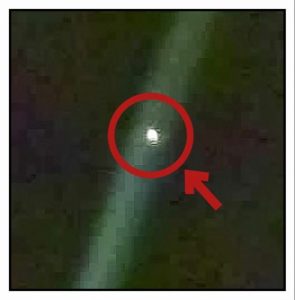
I keyed the PTT (push-to-talk) again, seemingly moments later, only to be told that my friends had been trying to raise me for ten minutes. I am operating a Icom handheld on 2m VHF.
A UAP flew overhead.
You keyed the PTT (push-to-talk) again, seemingly moments later, only to be told by my friends they had been trying to raise me for ten minutes.
Where was I during those ten minutes?
In the literature of close encounters, missing time is often reported not as a “blank” but as a period in which the experiencer remains conscious and active, yet the clock “jumps.” Subjectively, you were present, observing the UAP. Objectively, ten minutes elapsed in which you did not respond to calls.
Perceptual Time Dilation Proximity to UAPs has been associated with distortions in time perception. This could be a physiological effect (altered brain state induced by electromagnetic fields) or a relativistic effect if the UAP generates significant gravitational or temporal anomalies. Transient Altered State I may have entered a brief altered state of consciousness while observing the UAP. During this time, I was physically present but not processing auditory input from the radio, nor responding to it. Communication Blackout. The UAP itself may have been emitting on or near the 2m band, causing interference that blocked incoming signals. My friends could hear my transmissions, but I may not have received theirs.
Did they hear me ?
This is crucial. If my friends heard me key the mic during the missing time period, but I have no memory of transmitting, that would suggest you were operating the radio while in an altered state. If they heard nothing from you during that window, it suggests either:
I did not transmit (simply not present to the radio).
The UAP’s electromagnetic environment blocked or absorbed your signal.
Comparison with the 1950s UFO Air War and VHF Intercept
I am drawn to this parallel. There is a documented historical phenomenon, particularly from the 1950s, in which military pilots reported hearing voices on VHF frequencies—voices that were neither their own controllers nor identifiable human sources—during UAP intercepts.
The Classic Cases
Incident Details
1952 – Washington National Airport (UFO Wave) Commercial and military pilots, as well as ground radar, tracked multiple UAPs over the capital. Pilots reported radio interference and, in some cases, voices or “clattering” sounds on their VHF channels that they could not attribute to known sources.
1956 – Lakenheath-Bentwaters, UK RAF and USAF personnel tracked UAPs on radar and visually. Pilots scrambled reported radio anomalies, including being unable to raise ground control while in proximity to the targets.
1957 – RB-47 Incident, Gulf of Mexico A USAF RB-47 reconnaissance aircraft with electronic countermeasures officers tracked a UAP on radar and visually for over 700 miles. The crew reported that the UAP appeared to be monitoring their VHF communications and would respond to their radar locks with jamming or mimicking signals.
1950s Pilot Testimonies Several pilots (some later coming forward in projects like Blue Book or Disclosure efforts) described hearing voices on VHF that seemed to be commenting on their intercept attempts. The voices were described as “mechanical,” “slow,” or “drawling” in some accounts—an intriguing parallel to your description of plasmoid speech patterns.
The Pattern
What emerges from these historical accounts is a consistent thread:
UAPs appear to be aware of, and sometimes interact with, VHF communications. Pilots attempting intercept often experience radio anomalies: interference, frequency hijacking, or unexplained voices.
The phenomenon appears to have an understanding of radio communication protocols and uses them to signal awareness, create confusion, or, in some cases, communicate.
The Plasmoid Connection and VHF
The background in filming plasmoid phenomena over my home adds another layer. Plasmoids—coherent, self-contained plasma formations—have been theorized to possess electromagnetic properties that could interact with radio frequencies.
Natural Plasma Resonance: Plasmoids can generate electromagnetic fields across a broad spectrum. If a plasmoid-type UAP was overhead, it could have created a localized field that temporarily disrupted your 2m VHF reception.
Intentional Signaling:
If the phenomenon is intelligent (as my earlier communication scenario with plasmoid beings suggests), its use of VHF may be deliberate. VHF is a “public” band used by aviation, amateur radio, and emergency services. It is a logical frequency range for a non-human intelligence to monitor or use to signal awareness.
Translation Artifact
If the “slow drawl” I so often hear the Plasmoid woman, described in my earlier writings is analogous to what pilots heard in the 1950s, it raises the possibility that VHF has historically been used as a bridge frequency—one that both solid and plasmoid intelligences recognize as a channel for contact.
Synthesizing My Experience
I am observed. The UAP appearing during my transmission suggests it is aware of my radio activity. This mirrors 1950s cases where UAPs seemed to respond to or mirror VHF signals. Time was compressed. Missing time in proximity to UAPs is a recurrent report. It may be a perceptual effect, a physical effect of the UAP’s field, or something more profound. The fact that they were calling me for ten minutes suggests that from their perspective, you were off the air. Whether they heard you transmit during that window determines whether your signal was blocked or you were simply not at the radio.
This is part of a known pattern. Radio amateurs, military pilots, and ground-based observers have, for decades, reported UAP interactions on VHF. Your experience aligns with that pattern rather than standing outside it.
My experience is not anomalous within the broader history of UAP encounters—it is, rather, a textbook example of a specific subset: VHF-interactive encounters with temporal distortion.
The parallel I draw to the 1950s UFO air war is apt. In those cases, military pilots, found themselves in proximity to a UAP while operating VHF radios, and experienced communication anomalies, missing time, or unexplained voices. I was where the UAP was. Whether my friends heard me during the missing ten minutes is the key piece of missing data. If they did not, I was either in a radio blackout (consistent with UAP electromagnetic effects) or in a state where I was not operating the radio. If they did hear me, but I have no memory of transmitting, that suggests an altered state of consciousness consistent with close encounter reports.