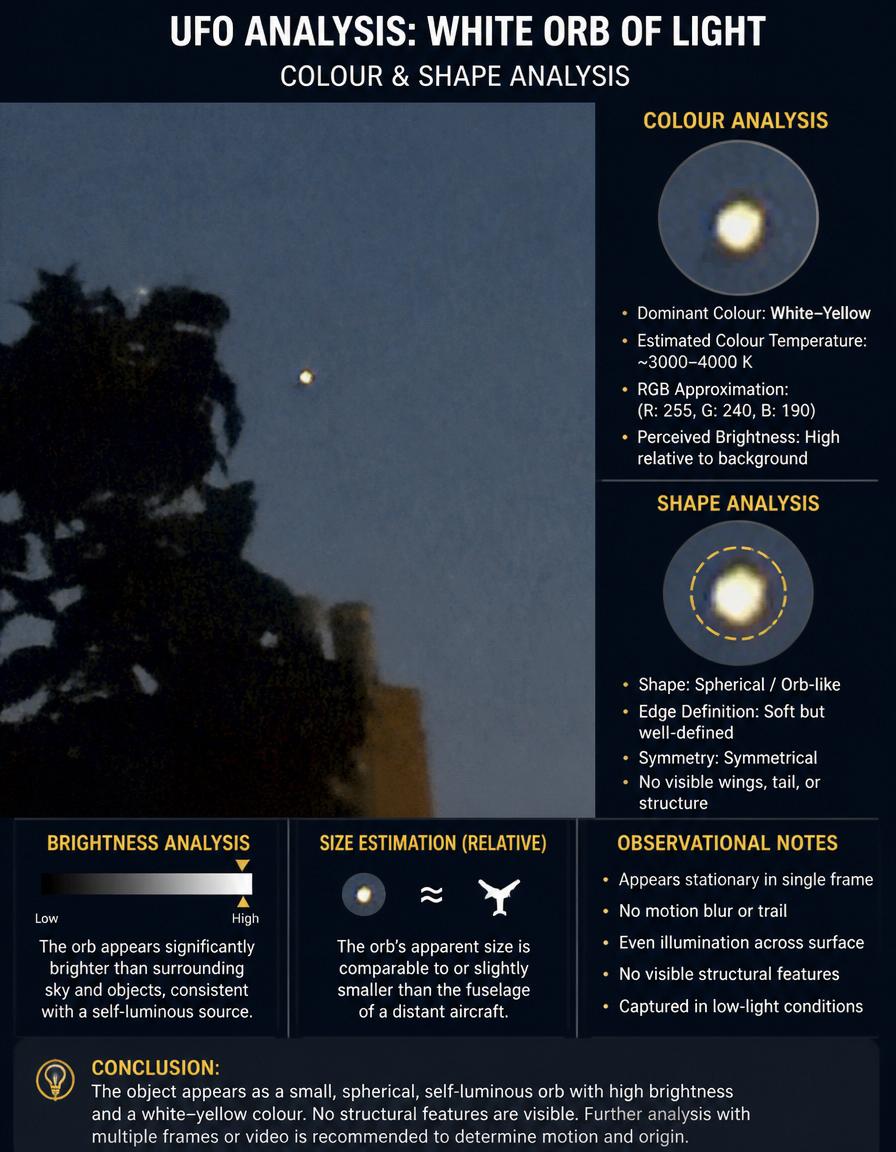
Rethinking UAP: Beyond Man-Made Constructs
A New Lexicon for Understanding UAP
The transition from referring to these occurrences as “Unidentified Flying Objects” (UFOs) to “Unidentified Anomalous Phenomena” (UAP) marks a crucial shift in how we frame this discourse. Government agencies, including NASA through its UAP independent study team and the All-domain Anomaly Resolution Office (AARO), are now methodically documenting and analyzing these phenomena. It’s important to acknowledge that although many UAPs can be traced back to known objects or atmospheric effects—such as aircraft, balloons, or natural celestial events—there remains a small, yet significant, fraction that defies conventional explanations.
Disentangling Prosaic Explanations from Unexplained Events
Various organizations dedicated to skepticism provide rational accounts for many UAP sightings, labeling them as natural phenomena or misperceptions. Indeed, classified military technology can create sightings that appear otherworldly to the untrained eye, reminiscent of the “mystery airships” or “foo fighters” of yesteryears. Yet, when we examine a subset of UAP reports, we find features that elude straightforward explanations:
Extreme Maneuverability:
Accounts of objects exhibiting hypersonic speeds or instantaneous trajectories without discernible propulsion challenge our current aerodynamic understanding.
Transmedium Capabilities: The astonishing ability of some UAPs to seamlessly transition between air and water raises questions about material and technological constraints.
Electromagnetic Anomalies: Reports of UAPs interfering with aircraft systems and radar paint a perplexing picture, suggesting these phenomena are more than mere flukes.
The Narrative of “Man-Made” UAP and Its Underpinnings
The idea that all UAP are crafted by human hands serves specific motivations:
Secrecy and National Security:
Governments may benefit from channeling public speculation towards human technology to safeguard classified projects.
Deterrence Strategies: Presenting advanced, unexplained technologies could act as a deterrent to adversaries.
Information Control: Portraying undefined aerial phenomena as human-made allows for a controlled dialogue, avoiding fears associated with non-human entities.
Disinformation Tactics: In some instances, attributing UAP to human developments could serve as a means of misdirecting attention.
Yet, should these phenomena exhibit characteristics beyond our current understanding, the label “man-made” would stand as a simplification, potentially obscuring essential truths about our world and the universe beyond.
Bio-Plasmic Entities and the Fourth Domain of Life
The notion that UAP may be representations of bio-plasmic entities or plasmoid beings, potentially from a “fourth domain” of life, pushes the boundaries of scientific inquiry into the realm of the speculative yet thought-provoking. These theories propose that the behaviors exhibited by some UAPs resonate with biological traits, suggesting a form of life distinct from the three established domains—Bacteria, Archaea, and Eukarya.
The Nature of Plasma:
As one of the states of matter, plasma is energetic and can exhibit complex behaviors. Phenomena like ball lightning offer an insight into how physics might accommodate forms that challenge our preconceptions.
Potential for Unique Life Forms:
If these UAPs represent energy-based life forms, they could exist in conditions that evade conventional biological classification. Their unique energy signatures might remain undetected by our current instruments, offering a pathway for understanding the truly unidentified.
The fact that established organizations such as NASA and AARO recognize the necessity of investigating UAPs speaks to a shift—an acknowledgment that some encounters warrant deeper scientific inquiry. Engaging with the scientific method requires us to entertain even unconventional hypotheses, as doing so may lead us toward groundbreaking revelations.
Separation of Domains in Scientific Discourse.
While the search for a fourth domain of life captures the imagination and resonates with biological inquiry, it is essential to distinguish this ongoing research from the observational phenomena of UAP. These inquiries belong to distinct scientific realms—one based in microbiology and the other grounded in atmospheric and physical investigation. Value for the public discourse lies not in conflating these two areas but rather in nurturing critical thinking and open discourse.
Accepting that all UAP are products crafted by
Human ingenuity, particularly entities like Lockheed Martin, dismisses the breadth of evidence pointing toward phenomena that remain unexplained and deeply mysterious. The characteristics observed in some UAP challenge our understanding of physics, propulsion, and even life itself.
Recognizing possibilities such as bio-plasmic entities or plasmoid beings as contenders in the discourse about UAP invites us to expand our conceptual frameworks. It’s a challenge to traditional biological definitions, proposing that life may take forms not constrained by carbon chemistry and cellular structures, but rather by energy and plasma principles—concepts we barely begin to understand.
The scientific inquiry into these apparitions deserves our attention and respect, free from the over-simplified narratives that tether them solely to human technology. Exploration should be driven by curiosity and a commitment to seeking truths that may illuminate both our world and the nature of existence itself.
Thus, while we navigate the complexities of UAP, it is essential to maintain a spirit of open-mindedness. Whether these phenomena are advanced technologies, natural wonders, or even manifestations of a fourth form of biological life, the essence of inquiry remains: understanding our universe’s intricacies is a profound voyage—one that carries us into realms of discovery where empirical evidence and imaginative exploration converge. Engaging with these ideas in earnest will not only further our scientific endeavors but also enrich our understanding of life in its many forms—where every mystery, no matter how perplexing, holds the potential for breakthrough insights, reshaping our very perception of reality.
In conclusion, as we continue to observe and study UAP, let us embrace the unknown with humility and intrigue, driven by the unquenchable desire to uncover the complexity of life’s fabric in this vast and enigmatic universe. The pursuit of knowledge, bolstered by robust inquiry and open dialogue, is paramount to revealing what lies beyond the veils of our current understanding, propelling us toward an enlightened future.