The Pilots: Human vs. Plasma Being

The Theoretical Biology and Physics of Plasma-Based Entities
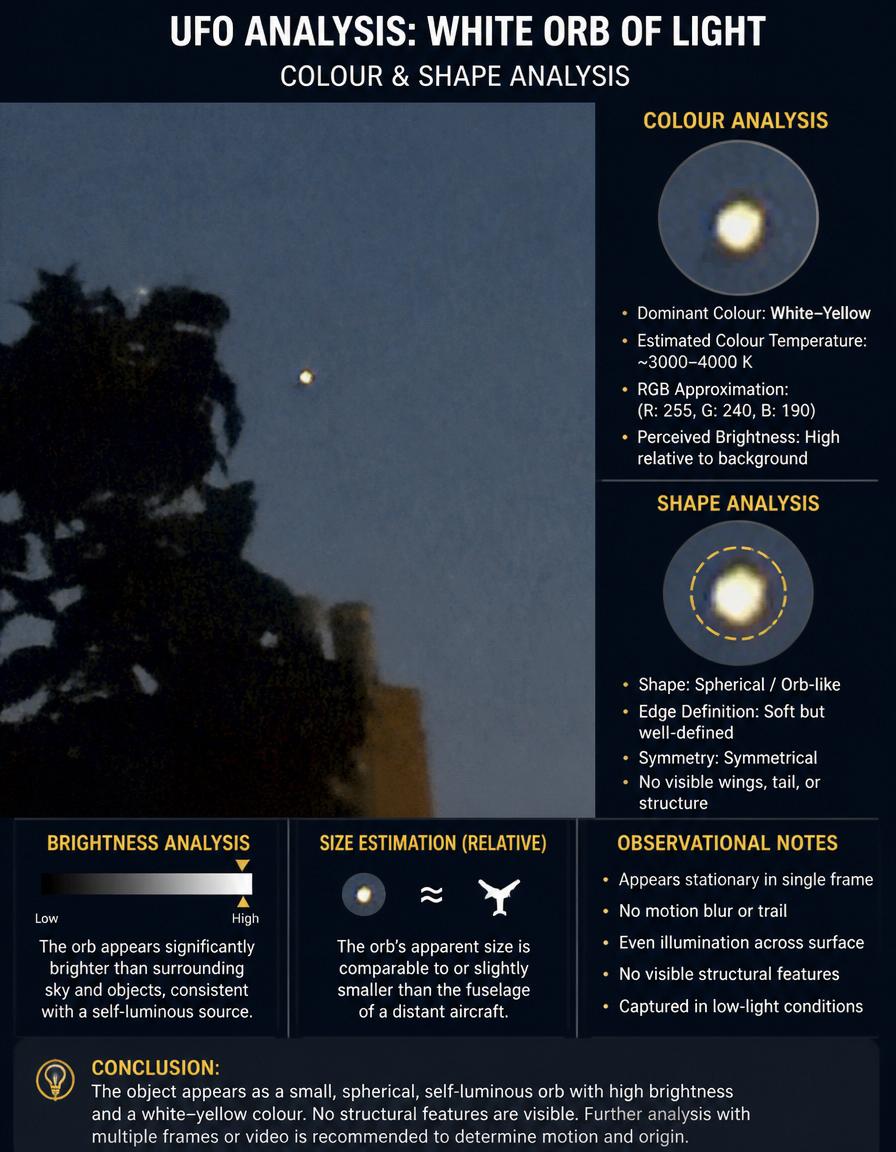
As I seemed to have established communication with the Bio Plasmic Craft, I asked the question what are the differences between human and plasma craft pilots.
The Pilots Biologies: Human Aircraft vs Bio Plasmic Vehicle. The conceptualization of a life form composed entirely of plasma—an ionized gas consisting of free electrons and positive ions—represents a radical departure from the carbon-based, liquid-water-dependent biology familiar to terrestrial science. In the context of Unidentified Aerial Phenomenon (UAP) research, such an entity would exist as a self-organizing electromagnetic structure rather than a cellular organism. Unlike biological entities that rely on chemical metabolism to sustain homeostasis, a plasma-based being would likely function as a complex, non-linear dynamical system, maintaining its structural integrity through the continuous input of energy, potentially utilizing ambient electromagnetic fields or atmospheric electrical discharges as a power source.
Structurally, the human body is a rigid, multi-cellular architecture requiring constant caloric intake to repair tissue and maintain entropy levels. A bio-plasmic entity would likely be an “open system” that derives energy directly from ambient electromagnetic fields or high-energy atmospheric phenomena. While humans are confined to a narrow range of environmental conditions (the “Goldilocks zone”), a bio-plasmic entity would be inherently adapted to high-energy environments, such as the upper atmosphere or the vacuum of space, where its plasma state could be stabilized by external magnetic fields.
Furthermore, the concept of “death” or “biological failure” differs significantly. For a human, the cessation of metabolic activity leads to rapid decomposition. For a bio-plasmic entity, the loss of structural integrity would likely manifest as the dissipation of the plasma field—a transition from a coherent, ordered state to a disordered, thermalized state. This suggests that such an entity might not possess a “body” in the traditional sense, but rather a “field-identity” that can expand, contract, or even merge with other plasma structures, rendering the concept of individual biological boundaries fluid rather than fixed.
Operational Capabilities and UAP Dynamics
If a UAP were piloted by such an entity, its flight characteristics would be dictated by the interaction between its own electromagnetic field and the Earth’s magnetosphere or local atmospheric conditions. Unlike traditional aerospace vehicles that rely on aerodynamic lift and thrust, a plasma entity could potentially achieve propulsion through Lorentz force interactions. By manipulating the local plasma environment, the entity could create pressure gradients or electromagnetic thrust, allowing for the “instantaneous” acceleration and high-velocity maneuvers often reported in UAP sightings. Furthermore, the entity’s high-energy state would likely result in significant photon emission, explaining the luminous, “glowing” appearance frequently documented in historical accounts of aerial anomalies.
Comparative Biology: Carbon vs. Plasma
The fundamental difference lies in the medium of information storage and processing. Carbon-based life utilizes DNA and protein folding to encode biological complexity. In contrast, a plasma entity would likely utilize the configuration of its electromagnetic field and the collective oscillations of its constituent particles (Langmuir waves) to process information.[8] While human biology is constrained by the slow diffusion of molecules, a plasma entity could operate at the speed of light, with information transfer occurring via electromagnetic waves. This suggests that such an entity would possess cognitive capabilities vastly superior to biological organisms, operating in a temporal regime that might appear “supernatural” to human observers.
Environmental Interaction and Perception
A plasma-based entity would perceive the world primarily through electromagnetic sensing rather than optical or auditory input. It would be sensitive to the full spectrum of radiation, from radio waves to gamma rays, allowing it to “see” through solid objects or detect the electrical activity of human nervous systems. This sensory modality would make the entity highly elusive, as it could remain invisible to standard optical sensors while maintaining complete awareness of its surroundings.
Theoretical Communication Paradigms for Plasma-Based Entities
The hypothesis that a Unidentified Aerial Phenomenon (UAP) might be piloted by a plasma-based entity—or that the craft itself is a self-contained plasma construct—requires a radical departure from conventional radio-frequency (RF) communication. In standard aerospace engineering, a hypersonic vehicle traveling at Mach 10 or higher generates a “plasma sheath” due to the dissociation of atmospheric molecules. This sheath creates a blackout zone where electromagnetic signals in the S, C, and X bands (1–10 GHz) are effectively blocked because the plasma frequency
For a plasma-based entity, this barrier is not an obstacle but a medium of existence, suggesting that communication would likely occur through the manipulation of the plasma state itself rather than through external radio waves.
If an entity exists as a coherent plasma structure, its “nervous system” would likely be composed of oscillating electromagnetic fields and ionized currents. Communication would theoretically involve the modulation of these internal fields, utilizing the plasma’s own refractive index to encode information. In the field of plasma physics, it is understood that waves can propagate through plasma if their frequency is higher than the plasma frequency.
Beyond standard electromagnetic modulation, such entities might utilize non-linear plasma effects. Research into laser-plasma interactions suggests that high-intensity pulses can create “wake fields” in plasma, which could theoretically be used to transmit information at speeds exceeding those of conventional wire-based or standard RF systems. Furthermore, if the UAP utilizes a “warp bubble” or metric-engineering propulsion as theorized in speculative physics, communication might not be limited by the speed of light in a vacuum, but rather by the geometry of the spacetime manifold itself. In this scenario, the entity would communicate by inducing gravitational or metric fluctuations, effectively bypassing the plasma blackout entirely.
Finally, one must consider the possibility of quantum entanglement as a communication medium. If the entity is fundamentally a high-energy plasma state, it may maintain coherence across its structure through quantum effects, potentially allowing for instantaneous state-sharing between different parts of the craft or between multiple entities. This would render the traditional “transmitter-receiver” model obsolete, replacing it with a distributed, non-local information network that is inherently resistant to atmospheric interference and electronic warfare.