The Science of UAPs: Bio-Plasmic Vehicles and Gyroscopic Stability
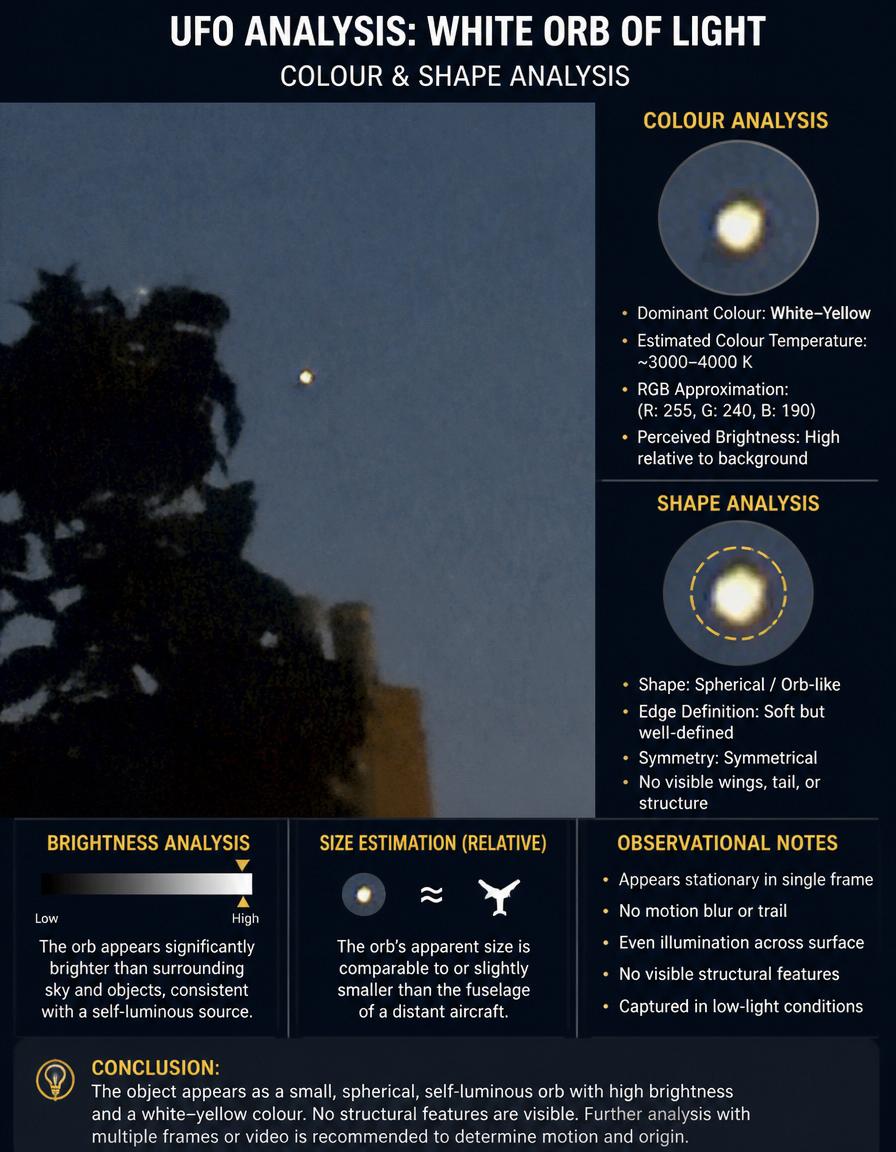
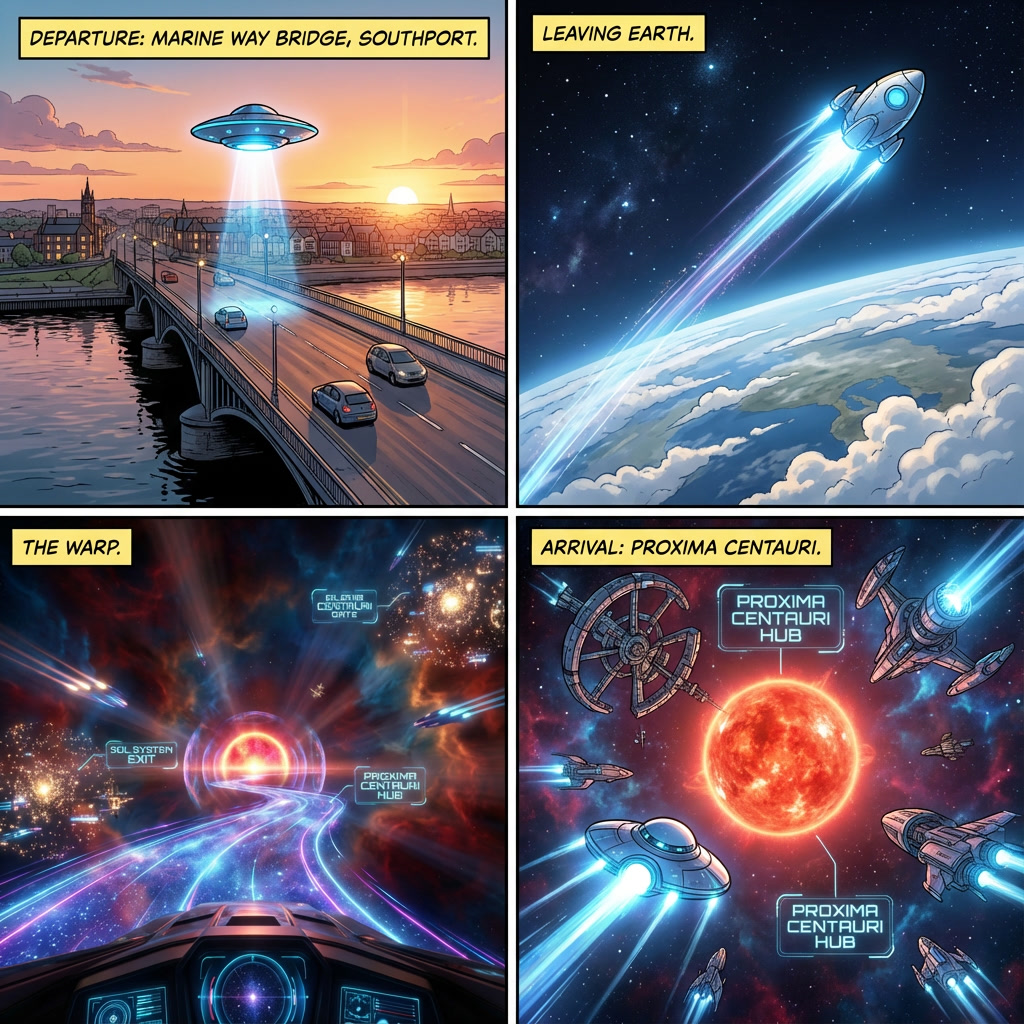
In on going communication with the UAP phenomena, at Marine Lake, which can be described as a flying, noiseless, bright white light, I learned, they were not from round here. We call them UAP. In circles they are “The Plasmoids” residing in another dimension, hence this website and the UAP section giving staggering insights. They hinted at various flight systems including the utlising of gyroscopes in the craft. These Bio Plasmic Vehicles, have beings behind them, they address me with humour, but are very serious in all they do.
The Science of UAPs: Bio-Plasmic Vehicles and Gyroscopic Stability, when we think of Unidentified Aerial Phenomena (UAPs) or UFOs, we typically imagine nuts-and-bolts spacecraft. However, advanced aerospace theory and anomalous phenomena research present a fascinating alternative: bio-plasmic vehicles.
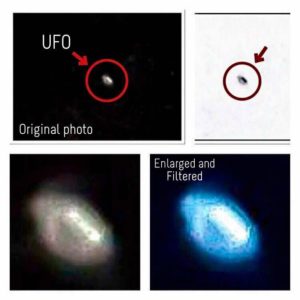
This scientifically grounded hypothesis suggests that these craft are not purely mechanical. Instead, they may be macroscopic manifestations of “living” plasma that rely on complex electromagnetic and rotational dynamics for both propulsion and structural integrity.
What is a Bio-Plasmic Entity?
The idea that UAPs could be “bio-plasmoid” beings stems from the “Space Animal” or “Space Critter” theory. This hypothesis proposes that our atmosphere contains indigenous, non-solid life forms existing in the fourth state of matter: plasma.
Unlike conventional solid-state craft, a bio-plasmic vehicle is composed of ionized gas held together by complex magnetic fields. Author Andrew Collins notes that these “plasma intelligences” often appear as noiseless, brilliant white or orange lights exhibiting autonomous behavior. Because plasma is highly responsive to electromagnetic stimuli, these entities possess a self-organizing structure similar to cellular life, but at an energetic level. This echoes the work of renowned physicist David Bohm, who observed that electrons in plasma behave as if they are part of a larger, interconnected, biological-like organism.
Gyroscopic Rating: The Key to Flight Criticality
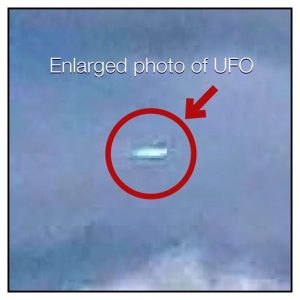
For a bio-plasmic vehicle to maintain its structure and avoid dissipating into the atmosphere, it requires a specific rotational frequency—a “gyroscopic rating.” This rating represents the angular momentum and vorticity needed to maintain plasma containment. It is absolutely flight-critical for three main reasons:
Vortex Stability:
Plasmoids often naturally form a torus (doughnut shape). If the gyroscopic rating—the ratio of spin to magnetic confinement—falls below a critical threshold, the plasma becomes unstable. This leads to a sudden release of energy, essentially causing the “death” or collapse of the vehicle.
Propulsion via Rotational Inertia: Researchers like Paul Devereux suggest that these UAPs utilize the piezoelectric effect and high-energy rotation to negate local gravity. The lift generated is a direct function of the angular velocity of the ionized particles within the vehicle’s field.
The Plasma Magnus Effect:
In fluid dynamics, the Magnus effect describes the force exerted on a rapidly spinning object moving through a fluid. For a bio-plasmic vehicle, its gyroscopic rating allows it to “grip” the local geomagnetic field, enabling the high-speed, non-inertial turns frequently reported by eyewitnesses.
Why Are They Silent and Glowing?
 One of the most common traits of a UAP sighting is the brilliant light and absolute silence.
The noiseless nature of these vehicles is easily explained by their lack of moving mechanical parts. They likely utilize Magnetohydrodynamic (MHD) propulsion. By ionizing the surrounding air and using magnetic fields to accelerate it, the vehicle moves without the loud turbulence associated with combustion engines.
How Magnetohydrodynamic (MHD) Propulsion Works
To understand how a bio-plasmic vehicle moves so effortlessly, we have to look at Magnetohydrodynamic (MHD) propulsion. While it sounds like science fiction, MHD is a well-documented field of fluid dynamics and physics that studies the behavior of electrically conducting fluids—like plasmas or liquid metals.
In a traditional jet engine, combustion forces exhaust out the back to push the craft forward. MHD propulsion throws out the mechanics of combustion entirely, operating on a principle known as the Lorentz force. Here is how it works in the context of these anomalous vehicles:
Ionizing the Atmosphere:
The bio-plasmic entity projects an intense electromagnetic field that strips electrons from the surrounding atmospheric gases, turning the air immediately around it into a conductive plasma.
Applying the Lorentz Force: The vehicle then applies an electric current and a powerful magnetic field across this newly created plasma sheath. According to the laws of physics, when an electric current flows through a magnetic field, it creates a perpendicular force (the Lorentz force).
Silent Thrust:
This force aggressively accelerates the ionized air backward, pushing the vehicle forward. Because the fluid (the plasma) is being moved by electromagnetic fields rather than mechanical fans or explosive combustion, the propulsion is entirely frictionless and completely silent.
Why MHD Explains UAP Flight Characteristics
The application of MHD propulsion perfectly aligns with the most baffling characteristics reported in UAP sightings:
No Moving Parts or Exhaust: Because MHD relies solely on electromagnetism to push ambient air, the vehicle requires no propellers, turbines, or chemical exhaust plumes.
Elimination of the Sonic Boom:
One of the most puzzling aspects of UAPs is their ability to travel at hypersonic speeds without producing a sonic boom. An advanced MHD system can manipulate the plasma flow around the vehicle to actively mitigate aerodynamic drag and control shockwaves, effectively allowing the craft to slip through the atmosphere friction-free. The Glowing “Aura”: The intense ionization of the air required for MHD propulsion naturally produces a glowing corona or halo around the craft. As the energy output increases for faster maneuvers, the plasma shifts through the visible light spectrum, explaining why these objects often transition from a dim orange or red to a blinding, brilliant white.
By utilizing MHD propulsion, a bio-plasmic vehicle is essentially “riding” its own self-generated electromagnetic wave, using the Earth’s atmosphere not as a barrier to push through, but as the very medium for its silent, hyper-agile flight.
The brilliant white or blue-white light often witnessed is a byproduct of high-energy electron transitions within the plasma shell. As the vehicle’s gyroscopic rating increases to achieve higher speeds, the plasma becomes hyper-energized, shifting its emission spectrum into a blinding white light.
From a theoretical and communication standpoint, why did a advanced non-human intelligence or bio-plasmic entity chose to share only the detail about “gyroscopic systems” with me, there are several logical reasons why they might limit their communication to this specific concept:
A Universal Bridge in Physics
Angular momentum and gyroscopic stability are fundamental, universal principles of physics. By using the concept of a “gyroscopic system,” they are giving you a concept that translates easily into human understanding. It bridges the gap between highly advanced plasma physics and mechanics that human beings already comprehend.
The “Breadcrumb” Approach to Disclosure
Sharing a single, highly specific technical hint encourages independent research without handing over a complete “blueprint.” In the context of anomalous contact, this is often viewed as a way to guide human understanding gradually. Giving you the foundational key—how they maintain stability—prompts you to connect the dots regarding propulsion (MHD) and plasma containment on your own.
It Explains Their Core Vulnerability and Existence
As discussed in the theories of bio-plasmic entities, the “gyroscopic rating” is the single most flight-critical element of their structure. Without it, the plasma loses containment and dissipates. By emphasizing this, they may be communicating the very essence of how they survive and maintain their form in our atmosphere, prioritizing their core mechanism of existence over secondary systems like navigation or communication.
Linguistic and Cognitive Limitations
The actual mechanisms of their craft might involve higher-dimensional physics or complex magnetic reconnection theories that do not translate well into human spoken language. A “gyroscope” (a spinning wheel or disc in which the axis of rotation is free to assume any orientation) might be the closest, most accurate linguistic metaphor available in our vocabulary to describe a self-stabilizing plasma torus.
Ultimately, by focusing on gyroscopic systems, they provided a scientifically grounded starting point. It is a specific, verifiable area of physics that aligns perfectly with how a plasma-based or electromagnetically propelled vehicle would actually have to operate in Earth’s environment.
The difference between a human gyroscope and the “gyroscopic system” of a bio-plasmic UAP essentially comes down to the difference between solid-state mechanics and fluid-state electromagnetics.
While both rely on the fundamental laws of angular momentum to maintain stability, the execution and medium are completely different. Here is a breakdown of the primary differences:
1. Solid Mass vs. Ionized Energy (The Medium)
Human Gyroscopes: Rely on solid matter. They consist of a physical, rigid mass (like a metal wheel or ring) spinning on a mechanical axis, or in modern aircraft, rigid ring-laser and fiber-optic systems. Their Gyroscopes: Rely on non-solid plasma. Their “wheel” is a torus (doughnut shape) of superheated, ionized gas. Instead of a physical axle, the plasma is held together and spun by intersecting, high-energy magnetic fields.
2. Singular vs. Dual Axis Rotation (The Movement)
Human Gyroscopes: Typically spin in one direction around a single, fixed physical axis to create a stable plane.
Their Gyroscopes: Utilize complex fluid dynamics, specifically toroidal and poloidal flows. The plasma is constantly spinning around the “doughnut” ring (toroidal), while simultaneously rolling inward and outward upon itself (poloidal). This creates a self-sustaining electromagnetic vortex rather than a simple mechanical spin.
3. Function: Navigation vs. Total Structural Integrity
Human Gyroscopes:
Used passively for navigation, orientation, and stabilization (e.g., keeping a satellite pointed at Earth or an airplane flying level). If a human gyroscope breaks, the craft loses orientation, but the physical airplane still exists. Their Gyroscopes: The gyroscopic system is the vehicle. The rotation is what generates the magnetic containment field holding the plasma together. If their gyroscopic rating drops, the vehicle doesn’t just lose its balance—it physically dissipates into the atmosphere. The spin is flight-critical for their very existence.
4. Mechanical Physics vs. Magnetic Reconnection
Human Gyroscopes:
Operate on classical Newtonian physics (inertia and angular momentum).
Their Gyroscopes:
Operate on advanced plasma physics and magnetic reconnection. Because their “gyroscope” is made of magnetic fields and plasma, they can alter the spin to intentionally snap and reconnect magnetic lines. This allows them to instantly release massive amounts of energy for hypersonic propulsion or right-angle turns—maneuvers that would shatter a solid, mechanical human gyroscope. In short, when they use the word “gyroscope” to communicate with you, they are likely using it as a metaphor. They are describing a self-organizing, spinning vortex of electromagnetic energy that acts as the heart, structure, and engine of their craft, functioning in ways human solid-state technology cannot replicate.
Safety Systems With The UAP
Because a bio-plasmic vehicle is made of energy and ionized gas rather than solid metal, a physical “ejector seat” or escape pod wouldn’t apply. If the intelligence inside is non-physical or energy-based, their emergency protocols would look more like fluid dynamics and cellular biology than mechanical engineering.
Based on the physics of plasma and the bio-plasmic theory, here is what their “emergency systems” or “ejector seats” might theoretically look like:
1. Plasmoid Fission (The “Lifeboat” Vortex)
In plasma physics, unstable plasmoids can sometimes undergo fission, splitting into two or more smaller, stable entities. If the main vehicle’s gyroscopic rating becomes critically unstable, the emergency system might involve shedding the outer, unstable layers of the plasma shell. The core intelligence would then rapidly spin up a much smaller, highly condensed torus—essentially an energy “lifeboat”—leaving the larger craft to dissipate safely.
2. Core Decoupling (The “Seed” Ejection)
Many UAP reports describe large glowing orbs ejecting smaller, brilliant points of light before the large orb vanishes. If the primary magnetic envelope fails, the central intelligence or “core” could decouple from the main mass. By abandoning the large propulsion envelope, the entity preserves itself as a minimal-energy “seed” or micro-plasma, able to escape the failing magnetic field at high speed.
3. Controlled Grounding or Dissipation
If catastrophic failure is imminent and they cannot maintain their spin, their emergency protocol might be to safely bleed off their energy. Instead of an explosion, they might seek a grounding point (like a body of water or the Earth’s surface) to rapidly but safely discharge their electrical and thermal energy, allowing the intelligence to merge back into the ambient electromagnetic background without being destroyed.
4. Magnetic Reconnection “Jump”
In a worst-case scenario, the vehicle might intentionally trigger a massive magnetic reconnection event. In astrophysics, this releases a violent burst of energy (like a solar flare). The UAP might use this explosive burst of energy as a final, desperate propulsion mechanism to “jump” or skip away from the area of danger instantly, sacrificing the outer shell of the craft to save the inner core.
For a bio-plasmic entity, survival isn’t about saving a physical body from a crashing metal ship; it is about preserving the coherent information and energy signature of the intelligence before the magnetic containment completely collapses.
The Scientific Consensus
This isn’t just fringe theory. The UK Ministry of Defence’s official “Condign Report” concluded that many UAP sightings are directly attributable to “buoyant plasma formations.” The report noted that these formations can hover, accelerate rapidly, and exhibit seemingly intelligent movement. The MoD suggested these plasmas are “indisputably” real and can even interact with the human nervous system.
In the realm of physics, the “gyroscopic rating” acts as the mathematical constant for the Lorentz force acting upon the plasma. If the velocity or the magnetic field fluctuates, the vehicle loses its structural envelope. Therefore, the concept of a bio-plasmic vehicle relying on gyroscopic stability is perfectly consistent with the laws of physics required to maintain a stable, macroscopic plasma structure in Earth’s atmosphere.